
Siberian Sturgeon Caviar Tasting: Serving Portions and Pairing
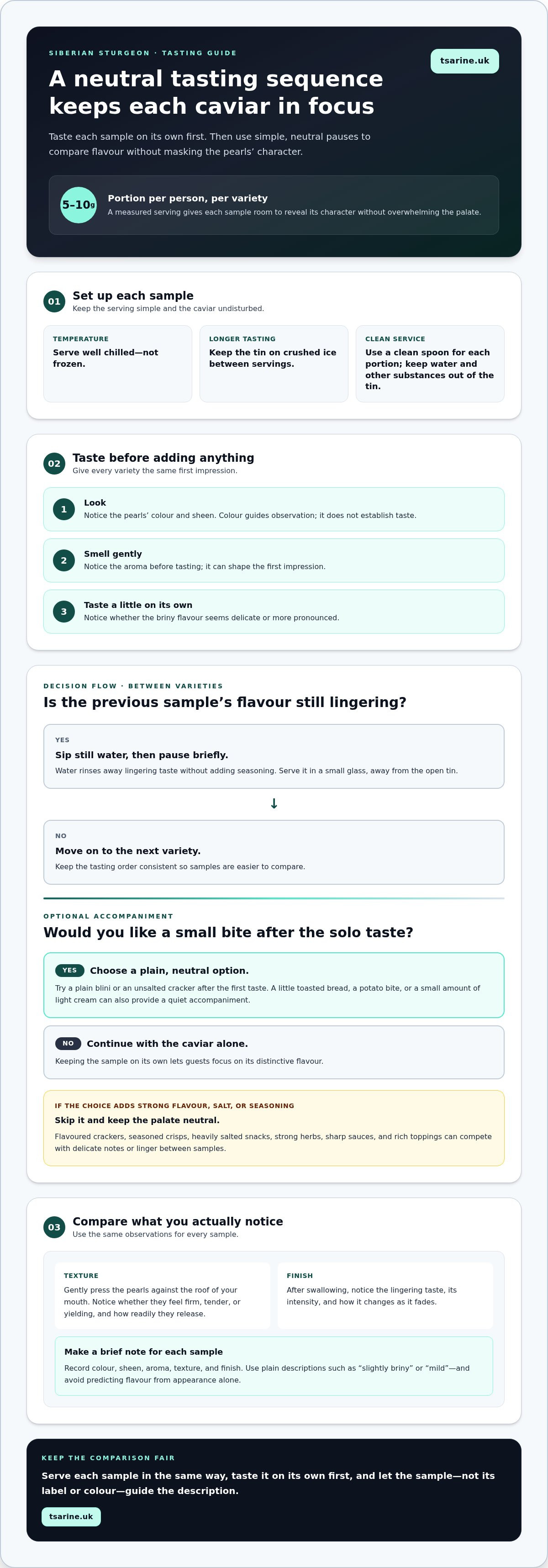
A composed tasting begins with 5-10 g of caviar per person, per variety. When hosting a vertical tasting of Siberian sturgeon, this measured portion gives each sample room to reveal its character without overwhelming the palate. Serve the caviar well chilled, then taste a little on its own before bringing in any accompaniment.
It’s natural to wonder whether a small serving is enough to appreciate the differences. A thoughtful sequence, rather than a generous spoonful, makes the details easier to discern. This guide explains how to plan portions, assess each pearl’s colour and sheen, aroma, texture and finish, and use neutral palate cleansers between tastes. You’ll also find serving guidance to keep the caviar’s delicate profile at the centre of the occasion, from the first impression to the lingering finish.
Key Takeaways
- Allow around 5-10 g of each variety per guest, so every sample can be savoured without overwhelming the palate.
- Begin with a small taste on its own, then assess the pearls’ colour and sheen, aroma, texture and lingering finish.
- Use plain blinis, unsalted crackers or a little water as neutral palate cleansers between samples.
- Keep each variety well chilled, not frozen, and serve it in its tin on crushed ice during a longer tasting.
- Choose contrasting Siberian sturgeon caviars for a vertical tasting, and let each sample’s character guide the order and pairings.
Neutral palate cleansers
A palate cleanser is a simple food or drink used between tastes to clear lingering flavours. For Siberian sturgeon, also called Acipenser baerii, plain blinis, unsalted crackers and water are restrained choices. Their mild character helps keep attention on the caviar’s own flavour. During a vertical tasting, serve the caviar alone first, then introduce one cleanser at a time. This sequence helps guests distinguish the pearls’ brininess from the accompaniment.
A plain blini is a small pancake with a mild, soft taste. Offer it after the first solo taste, rather than placing it beneath every spoonful. A little toasted bread or a potato bite can provide a similarly quiet base. Light cream is another possible accompaniment, but use only a small amount. Rich toppings, strong herbs and sharp sauces can compete with delicate notes, making samples harder to compare.
An unsalted cracker is a crisp, neutral base without added salt. Put a few beside the tasting dishes so guests can take a small bite between varieties. Avoid flavoured crackers, seasoned crisps and heavily salted snacks, whose seasoning may linger longer than the caviar itself. Keep each cleanser separate on the serving table, so guests can choose plain water or a small bite without mixing flavours.
Still water rinses away lingering taste without adding seasoning. Pour it into small glasses and invite guests to sip between samples. Keep water out of the caviar tin, as it can alter the taste and texture. Use a clean spoon for each portion, and keep bread, cream and water glasses away from open tins. These small steps preserve each sample’s character.
To store caviar, keep it well chilled and never frozen. After opening, keep the tin chilled, prevent water or other substances entering it, and use it promptly according to its storage guidance. During a tasting, return the tin to crushed ice between servings rather than leaving it at room temperature. A serving spoon should take only the amount needed, keeping the remaining caviar undisturbed.
Wikimedia Foundation describes Siberian caviar as having higher brine content than other kinds. That makes a neutral pause especially useful when guests compare a more briny taste with a milder one. Try this order:
- Taste each sample on its own before adding food.
- Sip still water between varieties, then pause briefly.
- Try a plain blini or unsalted cracker only after the solo taste.
- Return to the caviar alone to notice what the accompaniment changed.
This measured rhythm gives every Acipenser baerii sample its own moment, while plain accompaniments support rather than disguise its distinctive character.
Flavour, texture and finish
Assess each caviar sample in sequence: first its appearance and aroma, then its texture and lingering taste. Careful tasting helps distinguish the character of each Acipenser baerii selection without relying on appearance alone.
Flavor Profile
A flavour profile is the combination of tastes and aromas noticed in a sample. MDPI describes Siberian sturgeon caviar as having small to medium-sized eggs and a distinctive, slightly briny flavour. Begin with a small taste, then notice whether the brine is delicate or more pronounced. Consider the aroma before tasting, since a strong smell can shape your first impression.
For a considered comparison, use the same tasting sequence for every sample. Look at the colour and sheen, smell gently, then taste without a topping. Describe what you notice in plain terms, such as “slightly briny” or “mild”. Avoid assigning a flavour based only on how the eggs look. Colour can guide observation, but it doesn’t establish taste.
Texture and Finish
Texture describes how caviar feels in the mouth, while the finish is the taste that remains after swallowing. Gently press the pearls against the roof of your mouth and notice how readily they release. Pay attention to whether they feel firm, tender or yielding, rather than rushing to judge quality.
Next, observe the finish: its character, intensity and how it changes as the taste fades. A slightly briny note may remain, but distinguish that lingering taste from the initial impression. Make a brief note for each sample, including its colour, aroma, texture and finish. These observations help guests compare impressions without turning the tasting into a contest.
Comparison with Other Sturgeon Caviars
A comparison is a side-by-side tasting that identifies differences without assuming every species tastes alike. According to MDPI, Siberian sturgeon caviar has small to medium-sized eggs and a distinctive, slightly briny flavour. These are two useful reference points, but assess other caviars on their own qualities.
For a fair comparison, serve each sample in the same way and taste it on its own. Record colour, sheen, aroma, pearl texture and finish using consistent language. Then compare the notes: one sample may seem more briny, while another may feel different in texture. Avoid claiming that a species always has one fixed flavour; preparation and the individual sample shape what guests experience.
That measured approach is what makes a vertical tasting work well: each caviar gets its own moment, while shared observations make contrasts easier to discuss. Keep descriptions specific to what you actually sense, rather than relying on a label or colour to predict the result.
Which Siberian sturgeon caviars are suitable for a vertical tasting?
A vertical tasting compares different selections from the same species, allowing guests to consider each sample side by side. When hosting a vertical tasting of Siberian sturgeon, choose caviars identified as Acipenser baerii, then compare their sensory qualities without assuming the species name guarantees identical character.
Acipenser baerii is the scientific name for Siberian sturgeon. Keeping the species consistent helps focus comparisons on the samples themselves, rather than differences between species. Choose caviars with distinct identifying details on their packaging or accompanying product information. Compare only the details provided, and let the tasting reveal differences in appearance, aroma, texture and finish.
A tasting flight is an ordered group of samples presented for comparison. A home tasting can include three or four varieties, giving guests contrast while keeping the experience focused. If you have fewer distinct Siberian sturgeon caviars, serve fewer samples rather than repeating the same one under different labels. Clear identification matters: guests need to know which sample they are observing and discussing.
Visual appearance offers one comparison point, but it cannot establish flavour or quality on its own. Siberian sturgeon eggs measure 3.0 to 3.8 mm at their longest point. Note each sample’s colour and sheen, then assess its aroma and taste independently. A visible difference may prompt discussion, but only tasting can reveal whether the samples also differ in flavour, texture or finish.
A simple tasting card helps guests record impressions consistently. Label samples A, B and C, and keep their identifying information separate until the tasting ends. Invite guests to note:
- Colour and sheen before tasting.
- Aroma and first flavour impression.
- How the eggs feel in the mouth.
- The character of the finish.
Use the same observations for every sample. This gives guests a shared structure for comparison while leaving room for individual impressions. Hosting a vertical tasting of Siberian sturgeon is more revealing when the group compares notes after tasting each sample independently.
A smaller tin can suit a modest tasting portion; a larger quantity may suit dinner guests or a special occasion. Choose the amount according to guest numbers and how many caviars you plan to serve. Three clearly distinguished Acipenser baerii samples can create a focused tasting, especially when each has an identity guests can discuss. The aim is meaningful contrast, not the greatest possible number of tins.
What equipment and serving supplies are needed for a caviar tasting?
A caviar tasting setup is the collection of serving pieces used to present and compare samples. For a home tasting, prepare the original tins, crushed ice, small spoons, individual plates, water glasses and tasting notes. Each item has a clear role: keeping samples chilled, allowing measured servings or helping guests record what they notice.
The original tin is the container in which each variety is presented. Set each tin on crushed ice to keep the caviar chilled, not frozen. During a longer dinner or event, keep the tins on ice between servings. Arrange them with their labels visible so guests can connect each sample with its identifying details.
A mother-of-pearl spoon is a small utensil recommended for tasting caviar on its own. Place one beside each tasting position, or provide a clean spoon for each sample. A separate spoon for each tin helps prevent one variety from being carried into another. Keep water and other substances out of the container, as they can alter taste and texture.
Crushed ice is finely broken ice used to keep the tins chilled at the table. Place it in a shallow serving dish, then nestle each tin securely on top. Keep the caviar in its tin rather than transferring it into a dish for the whole tasting. This supports a clear presentation and keeps the remaining portion separate from serving utensils.
Small plates give guests a place for accompaniments without crowding the caviar tins. Set out plain blinis, unsalted crackers or small pieces of toasted bread separately, so guests can taste each sample before pairing it. A glass of water offers a neutral pause between varieties. Keep glasses and accompaniments apart from the ice dish to avoid spills near open tins.
A tasting card is a simple note sheet for recording observations about each sample. Provide a pencil and label the entries with the same names or letters used beside the tins. Guests can note colour, aroma, texture and finish in a few words. This makes the equipment useful rather than merely decorative, and gives the table a calm, considered rhythm.
Before guests arrive, arrange the supplies in tasting order. Place the first tin, spoon and card at each setting, then position the remaining tins on crushed ice. Keep accompaniments within reach but separate from the caviar. This layout makes the progression easy to follow and preserves the distinction between samples.
What UK food safety and allergen rules apply to serving caviar at an event?
Food safety means handling and serving food in ways that reduce contamination risks. For a UK caviar tasting, keep the product chilled, use clean utensils and follow the storage directions on its packaging. Event arrangements differ, so distinguish a private gathering from food supplied as part of a business. Practical hosting advice does not replace applicable food-business duties.
Allergen information identifies ingredients that may trigger a reaction. Keep the caviar packaging available, and use its ingredient and allergen details when answering guests. Caviar comes from fish eggs, but products may differ in ingredients or preparation. Avoid making assumptions from the word “caviar” alone. If a guest asks about an ingredient, read the specific tin’s label rather than relying on memory.
Cross-contact happens when food or utensils transfer traces of one ingredient to another. Keep each variety, accompaniment and serving utensil separate. For example, don’t use a spoon that has touched a blini, cream or another sample in an open tin. Place clean spoons beside each caviar, and replace any utensil that falls onto a shared surface.
Temperature control means keeping chilled food at the storage conditions stated on its packaging. Store unopened tins as directed, then bring out only the sample needed for the next part of the tasting. Serve each tin on crushed ice, and return it to the ice between servings. Don’t freeze caviar, and don’t allow water or other substances to enter its container.
Guest communication means clearly sharing ingredient details before tasting begins. Tell attendees which sample they are being offered and make its packaging information accessible. If blinis, toast or cream are served, identify them separately rather than describing the whole plate as “caviar”. This helps guests make informed choices about both the caviar and its accompaniments.
A clean serving station keeps food, utensils and waste apart. Before guests arrive, wash your hands, clean the surface and place fresh serving spoons beside each sample. Keep used spoons on a separate dish, not on the tasting table. Clear crumbs and spills promptly, especially around open tins and crushed ice.
For a business-run event, organise food handling and allergen communication around the applicable requirements for that operation. Keep the original packaging, ingredient details and serving plan together so staff can identify each sample accurately. At a private tasting, the same habits make the experience clearer: label each variety, separate accompaniments and serve with clean utensils.
TSARINE Caviar: Tsarine Caviar Luxury Gift Set
The Tsarine Caviar Luxury Gift Set offers a considered option for a host planning a caviar gift or special tasting occasion. For a tasting centred on Siberian sturgeon, TSARINE Caviar also offers Siberian Sturgeon Caviar (Acipenser Baerii), a fitting selection for your table. A vertical tasting depends on thoughtful comparison, so plan portions, serving supplies and tasting notes around the samples you choose.
If you’re arranging caviar for a larger gathering or business order, Wholesale Caviar Orders are also available. To explore the gift set or caviar offerings, visit tsarine.uk.
Make Your Next Tasting a Personal Occasion
Shape the next gathering around the people at your table. A tasting can be intimate and exploratory, or become a polished centrepiece for a larger celebration. Often, the most memorable detail is the care with which each guest is invited to notice, compare and share. With hosting a vertical tasting of Siberian sturgeon, your chosen samples can set the evening’s character, while thoughtful presentation gives the conversation room to unfold.
For a gift-led occasion, TSARINE Caviar offers the Tsarine Caviar Luxury Gift Set. Its Siberian Sturgeon Caviar (Acipenser Baerii) suits a tasting focused on this species, while Wholesale Caviar Orders serve broader event needs. Choose the option that fits your gathering, then shape the experience around your guests and the qualities you want them to discover.
Contact TSARINE Caviar to explore the caviar offering for your next occasion. May your table welcome a tasting filled with discovery, pleasure and gracious conversation.
Frequently Asked Questions
How much caviar per person for a tasting?
Allow around 5-10 g of each variety per guest for a home tasting. Work out the total by multiplying that portion by the number of varieties and guests. For example, someone tasting several samples receives a portion of each, not one shared allowance across the whole flight. This calculation helps you select an appropriate total quantity before choosing how to present the samples.
What order should you taste caviar in?
Begin with a clean palate and taste every sample on its own before adding accompaniments. Arrange the samples in a consistent sequence, moving from the most delicate impression to the more pronounced one, then use the same order for every guest. Record the sample labels as you go. This gives the group a shared frame for comparing impressions, even when individual preferences differ.
What is a vertical tasting of Siberian sturgeon caviar?
A vertical tasting compares different caviar selections from the same sturgeon species. With Siberian sturgeon, or Acipenser baerii, guests can focus on how each sample differs in appearance, aroma, texture and finish, rather than comparing different species. Identify each sample clearly, and don’t assume a label alone predicts its sensory character. The purpose is attentive comparison, not choosing a universal favourite.
How many caviar samples and what portion size should be served per guest?
Three or four varieties can form a manageable home tasting, with around 5-10 g of each variety per guest. Choose fewer samples if you want a focused comparison, or use more variety only when guests can give each one attention. Calculate the total by multiplying the guest count by the number of samples and the portion per sample, then plan tins accordingly.
What is the ideal serving temperature and tasting order for caviar?
Serve caviar well chilled, but never frozen. Keep it in its original vacuum-sealed tin in the coldest part of the refrigerator, preferably between −2°C and +2°C, and consume promptly after opening. For tasting order, start with caviar on its own while the palate is fresh. Then compare samples in a planned sequence, pausing between them before revisiting a favourite.
What foods and drinks pair well with Siberian sturgeon caviar?
Plain blinis, unsalted crackers, toasted bread and potato bites offer restrained accompaniments. Taste the caviar alone first, then try one pairing to see how it changes the impression. A dry white wine with good acidity, a delicate aromatic profile and an elegant finish can complement Siberian sturgeon caviar; serve it well chilled. Avoid overly fragrant or sweet wine, which can overpower its delicate flavour.
How can I host a caviar tasting at home, including a per-person budget?
Plan the budget from the number of guests, samples and portion size: around 5-10 g of each variety per person gives you the quantity to cost. TSARINE Caviar lists tins in 10 g, 20 g, 30 g, 50 g, 100 g, 250 g and 500 g sizes, so match your total requirement to a suitable combination. Add accompaniments and serving supplies separately; avoid guessing the final spend before selecting tins.