
Best Non-Alcoholic Champagne for Caviar: Pairing Guide
The best non-alcoholic champagne alternative for caviar may not be the drink that most closely imitates Champagne. The key is choosing a sparkling pour with freshness and gentle acidity to complement the caviar’s delicate salinity, while keeping its texture and flavour at the centre of the tasting.
If alcohol-free options have seemed too sweet, too simple or too much like ordinary non-alcoholic wine, choosing one can feel less than celebratory. There is more than one elegant approach: dealcoholised sparkling wine can offer a wine-like character, while sparkling tea or a botanical-based drink brings a different aromatic lift. The right match depends on the sweetness, acidity and level of sparkle you prefer beside the caviar.
This guide compares those styles, explains the difference between dealcoholised wine and sparkling drinks made without fermentation, and considers when crisp mineral water may be the most graceful companion. You’ll find a practical approach for a special dinner or home tasting featuring TSARINE’s Siberian or White Sturgeon Caviar, with each glass chosen to honour the caviar rather than compete with it.
Key Takeaways
- Prioritise a clean finish, balanced acidity and restrained sweetness so the drink complements caviar rather than masking it.
- Compare dealcoholised sparkling wine, sparkling tea, grape juice, verjus spritz and sparkling water by sweetness, bubbles and flavour intensity.
- Find the best non-alcoholic champagne alternative for caviar by matching the drink’s character to the caviar and your preferred style.
- Use a simple tasting process with Siberian or White Sturgeon caviar, letting your palate guide the pairing rather than relying on assumptions about flavour.
- Serve drinks appropriately chilled and follow the caviar producer’s storage and serving guidance for a poised home tasting.
What Makes a Non-Alcoholic Champagne Alternative Work with Caviar?
A non-alcoholic Champagne alternative is a celebratory sparkling drink chosen to accompany caviar without alcohol. The phrase describes the drink’s role at the table, not necessarily how it is made or whether it is wine. It could be dealcoholised sparkling wine, a botanical infusion or sparkling water. What matters is whether its character supports the caviar rather than competing with it.
That keeps the focus where it belongs: on the roe. Caviar has a delicate flavour and texture, so a successful pairing need not mimic Champagne. Look instead for freshness, restrained sweetness, fine bubbles and a clean finish. These qualities can complement Siberian or White Sturgeon caviar without assuming every variety tastes the same.
Which sensory qualities complement caviar?
Refreshing acidity can balance the richness of caviar and leave the palate ready for another taste. Gentle, persistent bubbles offer a similar lift, refreshing the mouth between spoonfuls without making the drink seem sharp or forceful.
Keep sweetness and flavour intensity in check. A noticeably sugary drink may make the caviar seem less delicate, while bold fruit, spice or botanical notes can linger longer than the roe. For the best non-alcoholic champagne alternative for caviar, seek harmony rather than spectacle: a poised sparkle, clean finish and enough character to feel celebratory, but not so much that the caviar disappears.
Serving context matters, too. For a tasting, begin with a small pour and a modest taste of caviar. Then notice whether the drink refreshes the palate or leaves a competing flavour behind. A useful introduction to what caviar is can provide background on its varieties and history, while tasting for yourself helps you decide which drink suits your serving.
What do alcohol-free, non-alcoholic, and sparkling alternatives mean?
These terms can refer to different kinds of drinks, so read the description and label rather than relying on the name alone. Dealcoholised sparkling wine starts as wine and has alcohol removed. Sparkling tea, juice and verjus are different styles of drink, while sparkling water offers bubbles without a wine-like base. Sweetness, acidity and aroma can vary considerably.
Alcohol content and terminology depend on the specific product and its label. If avoiding alcohol entirely is essential, check the product’s stated ABV and relevant label information rather than relying on terms such as “alcohol-free” or “non-alcoholic” alone.
Five Non-Alcoholic Champagne Alternatives Compared for Caviar
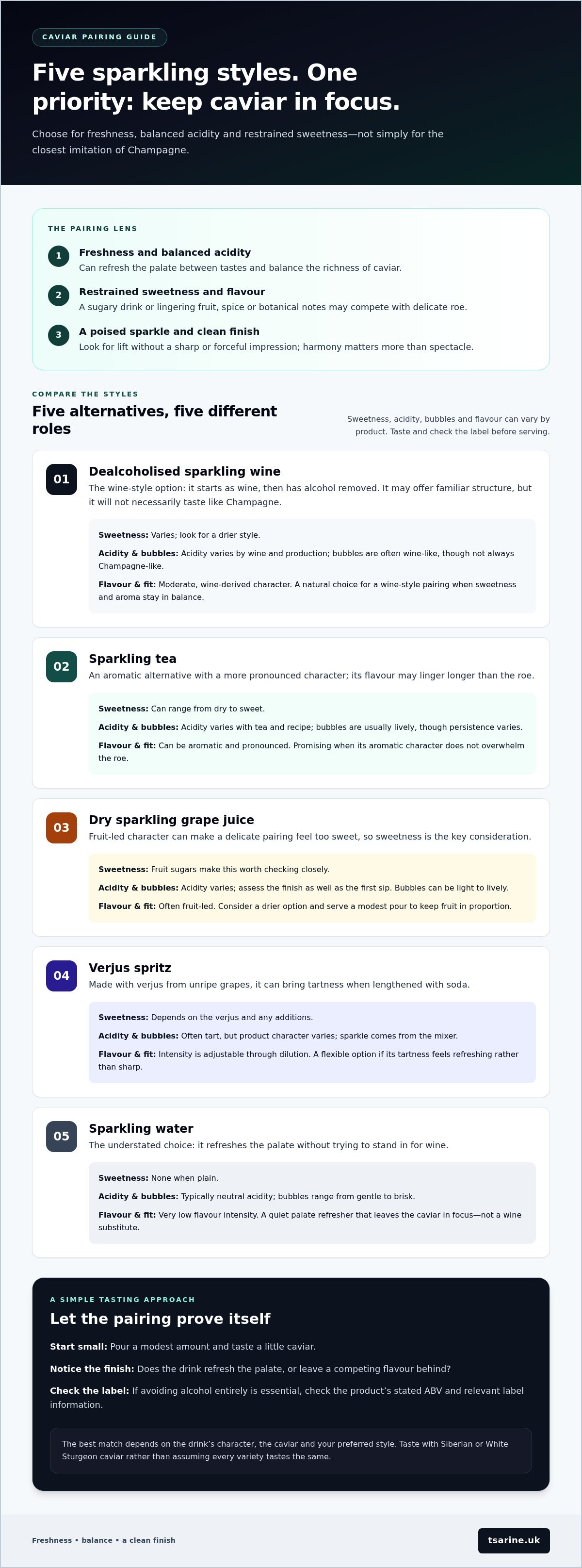
The best non-alcoholic champagne alternative for caviar depends on the balance you want at the table, not on how closely the drink imitates Champagne. The comparison below outlines typical differences between styles. Sweetness, acidity, bubbles and flavour intensity vary by product, so check the label and taste the drink before serving.
| Alternative | Sweetness | Acidity | Bubbles | Flavour intensity | Caviar suitability |
|---|---|---|---|---|---|
| Dealcoholised sparkling wine | Varies; look for a drier style | Varies by wine and production | Often wine-like, though not always Champagne-like | Moderate; wine-derived character | A natural choice for a wine-style pairing, provided sweetness and aroma stay in balance |
| Sparkling tea | Can range from dry to sweet | Varies with tea and recipe | Usually lively; persistence varies | Can be aromatic and pronounced | Promising with caviar when its aromatic character doesn’t overwhelm the roe |
| Dry sparkling grape juice | Fruit sugars make this worth checking closely | Varies; assess the finish as well as the first sip | Light to lively, depending on the drink | Often fruit-led | Consider a drier option, served in a modest pour to keep fruit in proportion |
| Verjus spritz | Depends on the verjus and any additions | Often tart, but product character varies | Set by the sparkling mixer | Adjustable through dilution | A flexible option if its tartness feels refreshing rather than sharp |
| Sparkling water | None when plain | Typically neutral | Ranges from gentle to brisk | Very low | A quiet palate refresher that leaves the caviar in focus, not a wine substitute |
Dealcoholised sparkling wine and sparkling tea
Dealcoholised sparkling wine is the closest wine-style option because it begins as wine before alcohol is removed. It can offer a familiar sense of structure, but it will not necessarily taste like Champagne. Check the product’s ABV, sweetness and ingredients on the label. Sparkling tea takes a more aromatic route, and its character may be more prominent. Begin with a restrained pour and see whether it complements the caviar or lingers over it.
Sparkling grape juice, verjus spritz, and sparkling water
With sparkling grape juice, sweetness is the main consideration: a fruit-led drink can make a delicate pairing feel too sweet. Verjus, made from unripe grapes, can bring tartness when lengthened with soda, although its precise acidity and flavour depend on the product. Sparkling water is the understated choice, refreshing the palate without trying to stand in for wine. For a home tasting, pair your chosen style with Siberian and White Sturgeon caviar, keeping the drink in a supporting role.
Which Caviar and Sparkling Alternative Make the Best Match?
Choose a pairing by tasting the caviar in front of you, rather than assuming a variety will always call for the same drink. Siberian Sturgeon and White Sturgeon caviar offer useful examples for a home comparison, but their exact character can vary, so assess each serving on its own. The drink matters just as much: sweetness, acidity and aromatic intensity differ between products within the same style.
Pairing rule: Match the drink’s intensity to the caviar; never let it overpower the roe.
| Caviar as tasted | Sweetness to seek | Acidity and bubbles | Aromatic character and styles to try |
|---|---|---|---|
| Subtle or delicate | Very restrained | Gentle freshness; fine, unobtrusive bubbles | Low aroma. Try sparkling water or a lightly flavoured sparkling drink. |
| Balanced or moderate | Low to moderate, depending on the caviar’s finish | Refreshing acidity and a steady sparkle | Moderate aroma. Compare a drier dealcoholised sparkling wine with a gently aromatic sparkling tea. |
| More pronounced | Still restrained, to avoid masking the roe | Bright acidity and lively bubbles may refresh the palate | A fuller aroma may be worth testing. Try sparkling tea or dealcoholised sparkling wine in a small pour. |
Pairing a delicate caviar with a restrained drink
If preserving subtlety is your priority, start with the least aromatic option. Plain sparkling water provides bubbles without adding sweetness or a competing flavour. A lightly flavoured sparkling drink can bring a little more character while keeping the pairing understated. Taste the caviar first, then sip the drink. This helps reveal whether the bubbles refresh the palate or the added flavour lingers too strongly.
Use Siberian or White Sturgeon caviar as the starting point for your tasting, not as a shortcut to assumed flavour notes. For broader context before comparing varieties, explore the guide to caviar varieties.
Pairing a more expressive caviar with a fuller sparkling style
If your tasting suggests a more pronounced caviar, a drink with greater aromatic presence may feel more balanced. Sparkling tea and dealcoholised sparkling wine are styles to compare, not guaranteed matches: one product may be delicate, another more assertive. Pour a little of each alongside the same caviar and notice which one leaves its flavour and finish clear. The best non-alcoholic champagne alternative for caviar is the drink that brings poise to that particular pairing, guided by your palate and the product’s actual formulation.
How to Choose and Serve an Alcohol-Free Caviar Pairing
A thoughtful pairing starts with the caviar, then lets the drink take its place as a graceful companion. For a home tasting with Siberian or White Sturgeon caviar, use this four-step sequence to make the comparison clear and unhurried:
- Choose the caviar. Select the variety you plan to serve and follow its producer’s storage and serving guidance.
- Set the desired flavour intensity. Decide whether you want the drink to be almost neutral or to bring a more noticeable aroma and character.
- Compare drinks. Choose a small selection of styles, considering sweetness, acidity, bubbles and flavour intensity.
- Taste. Try the caviar first, then sample each drink separately and notice which pairing leaves the roe perceptible.
This process helps you identify the best non-alcoholic champagne alternative for caviar by how it performs at the table, rather than by its name or promise to resemble Champagne.
A simple tasting method for comparing alternatives
Begin with a small taste of caviar on its own, giving its character a moment to register before adding another flavour. Then take a modest sip of one sparkling option, pause, and repeat with the next. A side-by-side tasting works well when each guest has a small pour of each drink and the caviar is served consistently.
Notice whether sweetness or aroma dominates, and whether the bubbles refresh the palate. The strongest candidate is not necessarily the most complex. Look for the drink that leaves the caviar clear in the finish. A few brief notes can help guests compare impressions without turning the occasion into a formal exercise.
Serving an alcohol-free pairing with elegance
Chill each drink according to its own serving guidance, and follow the caviar producer’s instructions for storage and serving. Use clean, understated glassware and modest pours so the tasting remains the focus. Keep accompaniments simple, too. Additional flavours can make it harder to judge how sweetness, acidity and aroma interact with the roe.
For complementary advice on presentation and tasting, read an elegant guide to eating caviar. Then explore TSARINE Siberian and White Sturgeon caviar as the centrepiece of your own alcohol-free tasting.
Make Caviar the Centrepiece of Your Alcohol-Free Celebration
A celebratory pairing need not imitate Champagne to feel special. Let the caviar lead, then choose a sparkling style for the mood you want: dealcoholised sparkling wine for a wine-like feel, sparkling tea for aromatic character, dry sparkling grape juice for a fruit-led note, verjus spritz for a tart lift, or sparkling water for an understated finish. In each case, sweetness, acidity and aroma should bring balance, not distract from the roe.
That is the guiding principle for finding the best non-alcoholic champagne alternative for caviar: choose a drink that leaves the caviar perceptible and finishes cleanly, inviting another taste. The label or style can suggest what to expect, but the final judgement belongs to your palate and the particular products you are serving.
A considered caviar tasting for guests
For an easy comparison, serve one caviar alongside two contrasting sparkling styles, perhaps a wine-like pour and a more aromatic one. Keep the portions modest and invite guests to taste the caviar first, then try each drink in turn. A simple prompt keeps the conversation focused: Does the pairing feel balanced? Is the finish clean? Does the caviar remain the centrepiece?
If guests are new to this delicacy, the guide to what caviar is offers helpful context before the tasting begins.
Choosing caviar for the occasion
TSARINE Caviar’s Siberian Sturgeon and White Sturgeon varieties offer two choices for a home tasting. Both are sourced from a sustainable farm in Italy. Rather than assume particular tasting notes, let guests discover each variety for themselves and choose a drink that complements what they experience. The TSARINE Caviar Luxury Gift Set is another considered option for an occasion, without needing to make the sparkling drink part of the gift.
From an intimate tasting to a more festive table, a thoughtful pour can lend ceremony while allowing the caviar to remain in focus. Discover TSARINE Caviar and choose a sturgeon caviar centrepiece for your next alcohol-free celebration.
Set the Scene for a Thoughtful Caviar Tasting
The most successful alcohol-free pairing is not a perfect imitation of Champagne. It is a sparkling drink whose sweetness, acidity and aroma leave the caviar’s character in focus. Choose a wine-like, aromatic, fruit-led, tart or understated style, then taste it alongside the caviar to find a balance that suits your palate. A clean finish and refreshing bubbles matter more than the label.
For a refined home tasting, make premium sturgeon caviar the centrepiece and let the drink play a supporting role. TSARINE Caviar’s Siberian and White Sturgeon varieties are sourced from a sustainable farm in Italy, offering considered choices for a special table without assuming their flavour notes in advance. The London-based business serves customers across the UK and internationally.
Ready to plan your next tasting? Discover TSARINE Caviar and choose a centrepiece for an occasion worth savouring. With thoughtful serving and a pairing guided by balance, your alcohol-free celebration can feel gracious and memorable.
Frequently Asked Questions
What is the best non-alcoholic Champagne alternative for caviar?
The best non-alcoholic Champagne alternative for caviar refreshes the palate without masking the roe. A dry, dealcoholised sparkling wine offers a wine-like option; sparkling water is a quieter choice, while sparkling tea can bring more aroma. Compare sweetness, acidity and finish with the caviar you’re serving, since recipes and flavour intensity differ between drinks.
Can you serve sparkling tea with caviar?
Yes, sparkling tea can accompany caviar, particularly if you enjoy a more aromatic pairing. Its fragrance and flavour may be more pronounced than those of sparkling water, so begin with a small pour and taste it alongside the roe. If the tea’s aroma dominates or lingers over the caviar, choose a gentler style. The right balance depends on the specific tea and your preference.
Is dealcoholised sparkling wine the same as non-alcoholic Champagne?
No, the terms do not necessarily describe the same thing. Dealcoholised sparkling wine begins as wine, then has alcohol removed; a sparkling drink described as a Champagne alternative may instead be made from tea, juice, verjus or another base. Neither phrase alone tells you the drink’s exact alcohol content or flavour. Check the product label, including its stated ABV, especially if you need to avoid alcohol entirely.
What non-alcoholic drink goes with Siberian Sturgeon caviar?
Start with a restrained, refreshing drink, such as plain sparkling water or a dry sparkling option with balanced acidity, then adjust after tasting the caviar. Assess the flavour of Siberian Sturgeon caviar directly rather than assuming what it will taste like from its name or variety. Try a small sip between tastes and notice whether the drink leaves the roe perceptible. The drink’s formulation and your palate can change the ideal match.
Is sparkling grape juice too sweet to serve with caviar?
Not always, but sweetness is the key detail to assess. Sparkling grape juice can be fruit-led, and a sweeter style may compete with caviar’s delicate character or leave a lingering finish. Look for a drier option, check the product description and taste a small pour alongside the roe before serving it to guests. If the fruit dominates, choose a less sweet drink with a cleaner finish.
How should you serve a non-alcoholic sparkling drink with caviar?
Serve the drink chilled according to its own guidance, and follow the caviar producer’s storage and serving instructions. Taste a small amount of caviar on its own first, then sip the sparkling drink and assess how the flavours finish together. Modest pours, clean glassware and simple accompaniments help keep attention on the pairing. For a tasting, offer two contrasting drinks side by side so guests can compare them.
Can you pair caviar with sparkling water instead of Champagne?
Yes, plain sparkling water can be an elegant accompaniment if you prefer a neutral, palate-refreshing choice. Its bubbles provide a lift without adding the sweetness or aroma found in some sparkling drinks. It is not a wine substitute, but it can let the caviar remain the focus. Choose a level of carbonation you enjoy, serve it chilled, and taste it between bites to see how it suits the roe.