
Caviar on Potato Rosti with Chives: An Elegant, Crisp Recipe
Keep the rosti crisp, the caviar cool and the seasoning restrained. That balance is what makes caviar on potato rosti with chives feel polished rather than fussy. To get there, drain the potatoes well, cook the cakes until golden and let them cool briefly before adding the topping. These steps help avoid rosti that brown before they crisp or become too hot for the caviar.
This recipe takes you from preparing the potatoes to frying and assembling the finished bites. Look for a golden surface that releases easily from the pan, rather than relying on a fixed cooking time. A short rest before adding the caviar preserves the contrast between warm potato and cool, delicate pearls.
Fresh chives bring a gentle savoury lift, while careful seasoning lets the caviar remain the focal point. Follow the sequence below to serve these elegant bites as an appetiser for a special meal or an intimate gathering.
Key Takeaways
- Learn the preparation and cooking cues for rosti with a crisp exterior and tender centre.
- See how a small amount of crème fraîche and chives can complement caviar on potato rosti with chives without crowding its flavour.
- Follow a simple assembly order so the garnish stays fresh and the appetiser is ready to serve.
- Adapt the rosti for canapés and troubleshoot soft potatoes or over-seasoning.
- Compare Siberian and White Sturgeon caviar as possible choices, checking current availability before selecting a variety.
Why caviar on potato rosti with chives makes an elegant appetiser
Crisp grated-potato cakes topped with chilled caviar and fresh chives make a quietly striking appetiser: golden and warm beneath, cool and delicate on top. Potato rösti is grated potato cooked until crisp, and here each small cake provides a simple base for caviar and herbs. The combination feels special without requiring elaborate technique. The main things to get right are draining the potatoes, cooking them patiently and adding the garnish at the right moment.
The appeal lies in contrast rather than complexity. A well-browned surface gives way to tender potato, while chilled caviar adds a cool, delicate texture. Chives bring a fresh, savoury note. Season the potato lightly, since the caviar contributes its own seasoning, and avoid crowding the bite with extra toppings that mask the individual flavours.
What makes rösti a fitting base for caviar?
Grated potato makes a dependable base when it is drained well and cooked until its surface is crisp. Excess moisture can soften the cake and make it harder to handle, so press the potato before it reaches the pan. For background on the dish’s Swiss origins and traditions, see this overview of potato rösti.
Let the cooked rösti rest briefly before adding caviar. It should still be warm, but not piping hot. A very hot surface can affect the caviar’s delicate texture and diminish the contrast between the warm base and cool topping. This short pause is part of the cooking sequence, not an extra complication.
What to prepare before cooking
Gather the ingredients and equipment before heating the pan. That way, you can serve the rosti soon after cooking and keep the caviar chilled until assembly.
- Potatoes: the foundation of the crisp cakes.
- Chives: finely snipped for a fresh, restrained finish.
- Cooking fat: for frying the rosti until golden.
- Salt: used lightly, with the caviar’s seasoning in mind.
- Caviar: kept chilled and added just before serving.
- Crème fraîche: optional, in a small amount for a cool, creamy accent.
Set out a grater, a clean tea towel or suitable cloth for draining the potatoes, a bowl, a spatula and a serving plate. Snip the chives and portion any optional crème fraîche in advance. With everything ready, caviar on potato rosti with chives is straightforward to assemble, and the final steps can be calm and well timed.
How to make crisp potato rosti without overwhelming the caviar
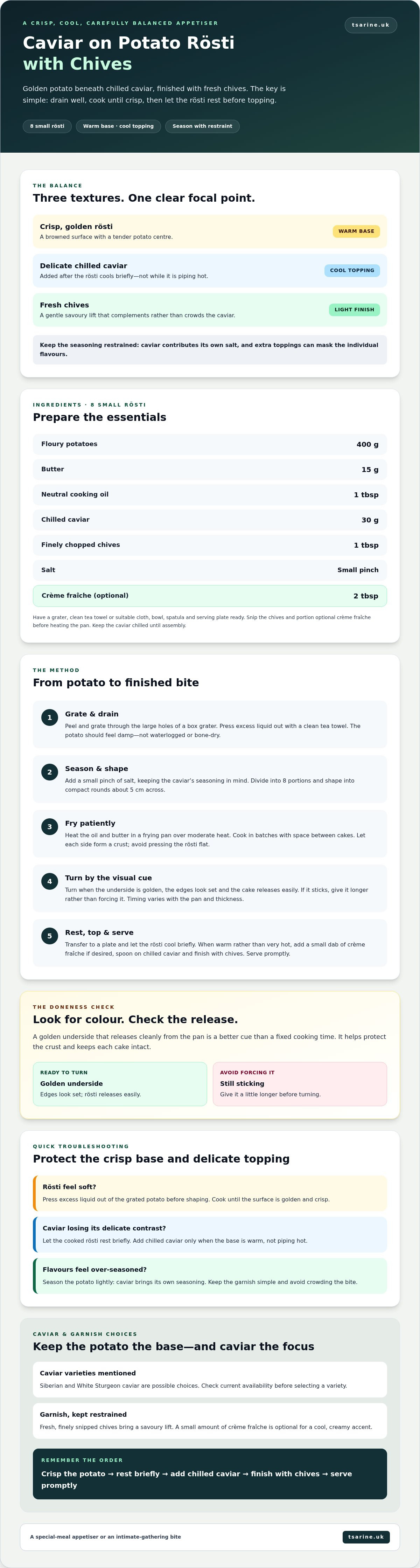
For eight small rosti, prepare 400g floury potatoes, 15g butter, 1 tablespoon neutral cooking oil, a small pinch of salt, 30g chilled caviar and 1 tablespoon finely chopped chives. Crème fraîche is optional; if using it, set out 2 tablespoons. These quantities keep the potato as the base and the caviar as the finishing accent.
Grate, season and shape the potato
Peel the potatoes, then grate them through the large holes of a box grater to make strands that cook evenly. Put the grated potato in a clean tea towel and press out excess liquid over the sink. It should feel damp, not waterlogged or bone-dry. Season lightly, remembering that the caviar will add its own salt. Divide the potato into eight portions and shape each into a compact round about 5cm across.
Fry and finish each rosti
Heat the oil and butter in a frying pan over moderate heat. Cook the rosti in batches, leaving space between them so moisture can escape. Avoid pressing them flat once they are in the pan. Let each side form a crust before turning. The timing depends on the pan and the thickness of the cakes, so use colour and whether the rosti releases from the pan as your guides.
- Grate and drain: Prepare the potatoes as described, pressing away excess moisture.
- Shape: Form eight evenly sized rounds so they cook at a similar pace.
- Fry: Cook until the undersides are golden and the edges look set, then turn gently with a thin spatula. If a rosti sticks, give it a little longer rather than forcing it.
- Rest: Transfer the cooked rosti to a plate and let them cool briefly. They should be warm, not very hot, before garnishing.
- Serve: Add a small dab of crème fraîche if desired, then spoon on the chilled caviar and finish with chives. Serve promptly.
Turn the rosti when its underside is golden and releases cleanly from the pan, not simply when the timer says so. This cue helps protect the crust and keeps each cake intact. For caviar on potato rosti with chives, wait until the rosti has rested before adding the topping, so the potato’s heat does not overwhelm the garnish. If you are choosing caviar for the occasion, you can explore TSARINE Caviar as one possible source.
Which caviar and garnish choices suit chive-topped potato rosti?
Choose toppings that let the crisp potato and caviar remain distinct. Serve the rosti plain for the most direct contrast, add a small touch of crème fraîche for creaminess, or finish with finely snipped chives for a fresh, savoury lift. You can use both crème fraîche and chives, but keep them restrained. Too much garnish can obscure the simple balance that makes caviar on potato rosti with chives appealing.
Should you add crème fraîche to caviar rosti?
Crème fraîche is optional, not essential. A small dab adds a smooth contrast, but too much can make each bite feel heavy and compete with the caviar. For a dairy-free version, leave it out and finish the rosti with caviar and chives. Well-cooked potato provides enough substance on its own.
How to choose a caviar for this recipe
Choose a caviar whose profile you already enjoy rather than assuming one variety is automatically the perfect match. TSARINE offers Siberian Sturgeon and White Sturgeon caviar; check current availability before choosing either. For broader context, explore this guide to types of caviar.
For your first serving, keep the garnish simple and taste the elements together before making adjustments. A little crème fraîche adds creaminess, while leaving it out puts the potato and caviar more directly in focus. Either approach works, provided the chives remain a light finishing note rather than a dense layer.
How to assemble and serve caviar on potato rosti with chives
Assemble the bites just before serving, while the rosti are still warm and their surfaces remain crisp. Arrange them in a single layer on a serving plate or small platter, with enough space to lift each one without disturbing its topping. Add a little crème fraîche if desired, spoon on the chilled caviar, then finish with finely snipped chives.
Add the caviar to freshly cooked rosti after they have rested briefly and cooled to warm rather than piping hot. Assemble just before the platter goes to the table. This timing helps preserve the caviar’s delicate texture and the contrast between crisp potato and cool topping. Keep the presentation simple: let the golden edges show and avoid extra garnishes that compete for attention.
How much garnish should each rosti carry?
For the eight small rosti in the recipe, allow roughly 3-5g of caviar per piece, adjusting to taste and the size of each cake. If using crème fraîche, add only a small dab beneath the caviar. Scatter a few finely cut chive pieces over the top rather than covering the surface. Their role is to provide a light, fresh finish.
For a relaxed gathering, arrange the topped rosti on a small platter and serve any extra caviar separately, kept chilled. Guests can add more to their own portion without overloading the prepared cakes. Use a small spoon and handle the caviar gently.
What can you prepare ahead of time?
Set out the serving plate and spoon, chop the chives and portion the optional crème fraîche before cooking. Prepare the potatoes shortly before frying, following the grating and draining steps. Cooking close to serving time gives the rosti their best chance of staying crisp.
Keep the caviar chilled according to its packaging while the potatoes cook. Take it out for assembly, add it at the last moment, and return it promptly to chilled storage after serving, following the pack instructions. This sequence makes caviar on potato rosti with chives easier to serve at its best, even when you are hosting and want to spend less time at the hob once guests arrive.
For a considered finishing touch at home, explore TSARINE Caviar.
Make the recipe your own, then explore TSARINE Caviar
Once the basic method feels familiar, small adjustments can suit the appetiser to the occasion without disturbing its balance. Shape the potato into smaller rounds for canapés, keeping them thick enough to hold their form as they cook. For a lighter finish, omit the crème fraîche or use only a small dab. Keep the chives finely cut and add the caviar last. Caviar on potato rosti with chives needs little embellishment.
How to troubleshoot common rosti problems
If the rosti turn out soft, check whether you pressed enough moisture from the grated potatoes. A crowded pan can also trap steam, so cook in batches and leave space around each cake. If a rosti breaks, shape it more firmly before frying and wait until its base is set and golden before turning. Use a thin spatula and lift carefully.
If the finished bite tastes too salty, consider how much salt went into the potato before adding anything else. Caviar contributes its own seasoning, so avoid trying to balance an overly salty rosti with more garnish. Next time, season the potato lightly and taste a finished bite before adjusting the rest.
If you added caviar too early, serve the remaining portions with freshly cooked rosti and add the topping at the last moment. The best approach is to prepare each component thoughtfully, then bring them together just before serving.
Where to discover caviar for your next serving
For broader guidance on enjoying caviar, including serving etiquette, read this guide on how to eat caviar. It offers further context for approaching the final garnish with care.
TSARINE Caviar is a premium sturgeon caviar brand sourcing from a sustainable farm in Italy. Its range includes Siberian Sturgeon and White Sturgeon caviar; check current availability before selecting a variety. If you are planning this appetiser for a special meal, explore the caviar tins and gift sets available from TSARINE Caviar for a considered finishing touch.
Bring a little elegance to your next gathering
The secret to caviar on potato rosti with chives is balance: drain the grated potato well, cook each rosti until crisp and golden, then let it rest briefly before adding chilled caviar. Keep the chives light and crème fraîche optional so each element has room to shine.
With the timing in place, this simple appetiser can suit a special meal or an intimate gathering. Small rosti make graceful canapés, while a platter of larger ones offers an inviting start to dinner. Serve them freshly assembled, when the potato is still warm and the caviar remains cool.
For your next serving, explore TSARINE Caviar, whose premium sturgeon caviar is sourced from a sustainable farm in Italy. Its range includes Siberian and White Sturgeon caviar; check current availability as you choose. Explore TSARINE Caviar and browse caviar tins and gift sets for your table.
Frequently Asked Questions
Can you put caviar on potato rosti while it is still hot?
No. Let freshly cooked rosti rest briefly before adding caviar. Aim for warm rather than piping hot: a very hot surface can affect the caviar’s delicate texture and diminish the contrast between the potato and its cool topping. Use the resting time to arrange the serving plate or prepare the chives. Add the caviar just before serving so each bite retains its intended texture and temperature.
How do you keep potato rosti crisp when serving it with caviar?
Press excess liquid from the grated potato before shaping, then fry the rosti in a moderately heated pan without crowding them. Space allows moisture to escape rather than collect as steam, which can soften the cakes. Turn only once the underside is golden and releases cleanly. For the best texture, fry close to serving time, let the rosti rest briefly, then add the chilled caviar just before serving.
What kind of potatoes work best for rosti topped with caviar?
Floury potatoes are a reliable choice for rosti, as their texture suits grating and frying into a tender centre with a crisp surface. Peel them and use the large holes of a box grater for even strands. Potato varieties can differ in moisture, so drain the grated potato well. It should feel damp, not wet, which helps the cakes brown and hold together.
Can you prepare potato rosti ahead of time for a dinner party?
You can prepare your equipment, chives and optional crème fraîche in advance, but fry the rosti close to serving for the crispest result. Grate and drain the potatoes shortly before cooking, as prepared potato can discolour while waiting. If you need to cook the rosti ahead, expect some loss of crispness as they cool. Keep caviar chilled according to its packaging and add it only at the final moment.
What can you use instead of crème fraîche on caviar rosti?
You can simply leave it out. Crème fraîche is optional, and plain rosti topped with caviar and a light scattering of chives makes a balanced appetiser. This is also the simplest dairy-free option. If you choose another topping, keep it modest and avoid adding extra salt before tasting, so the potato and caviar remain the focus.
How much caviar should you serve on each potato rosti?
For a small rosti, begin with roughly 3-5g of caviar and adjust to taste and the size of each cake. A measured spoonful lets the caviar complement the potato without covering its crisp surface. If you are serving guests, arrange the topped rosti on a platter and offer any extra caviar separately, kept chilled, so everyone can choose their own amount.
Can you use Siberian or White Sturgeon caviar on potato rosti?
Yes, either Siberian Sturgeon or White Sturgeon caviar can be served on potato rosti. Choose the variety whose profile you already enjoy rather than assuming one is the definitive match. TSARINE Caviar offers both Siberian and White Sturgeon caviar, though current availability should be checked before selecting a variety. Keep the garnish simple and add the caviar to warm rosti just before serving.