
Common Mistakes When Buying Caviar Online: A Refined Buyer’s Guide
The most polished presentation isn’t always the clearest guide to what’s inside the tin. The common mistakes when buying caviar online often begin when elegant imagery and prestige language take the place of useful details about species, origin and handling.
It’s understandable to want confidence before ordering a delicacy that depends on freshness and careful delivery. Clear product information makes it easier to compare options and choose caviar suited to a celebration, a tasting or a thoughtful gift. Look for a named species and a specific account of provenance rather than assuming a prestigious-sounding origin tells the whole story. Siberian Sturgeon and White Sturgeon, for example, identify distinct varieties, while sourcing from a sustainable farm in Italy gives shoppers a concrete point of reference.
This guide explains how to read product descriptions, assess sourcing information and compare delivery arrangements before you buy. With a little attention to these details, the choice can feel less like a leap of faith and more like the beginning of a beautifully considered occasion.
Key Takeaways
- Common mistakes when buying caviar online include letting elegant imagery or prestige language outweigh the product facts.
- Compare listings by named species, product form and tin size to understand what you’re choosing.
- Assess provenance through specific sourcing details, not broad claims such as “premium” or “authentic”.
- Read delivery information carefully so you understand how chilled-food handling is described.
- Use a simple pre-order checklist to match the caviar and format to your occasion and expectations.
Common mistakes when buying caviar online: trusting appearance over product details
An elegant tin and a photograph of glistening pearls can set the scene, but neither tells you precisely what you’re buying. One of the common mistakes when buying caviar online is letting polished imagery or prestigious-sounding language make the decision before checking the listing’s facts.
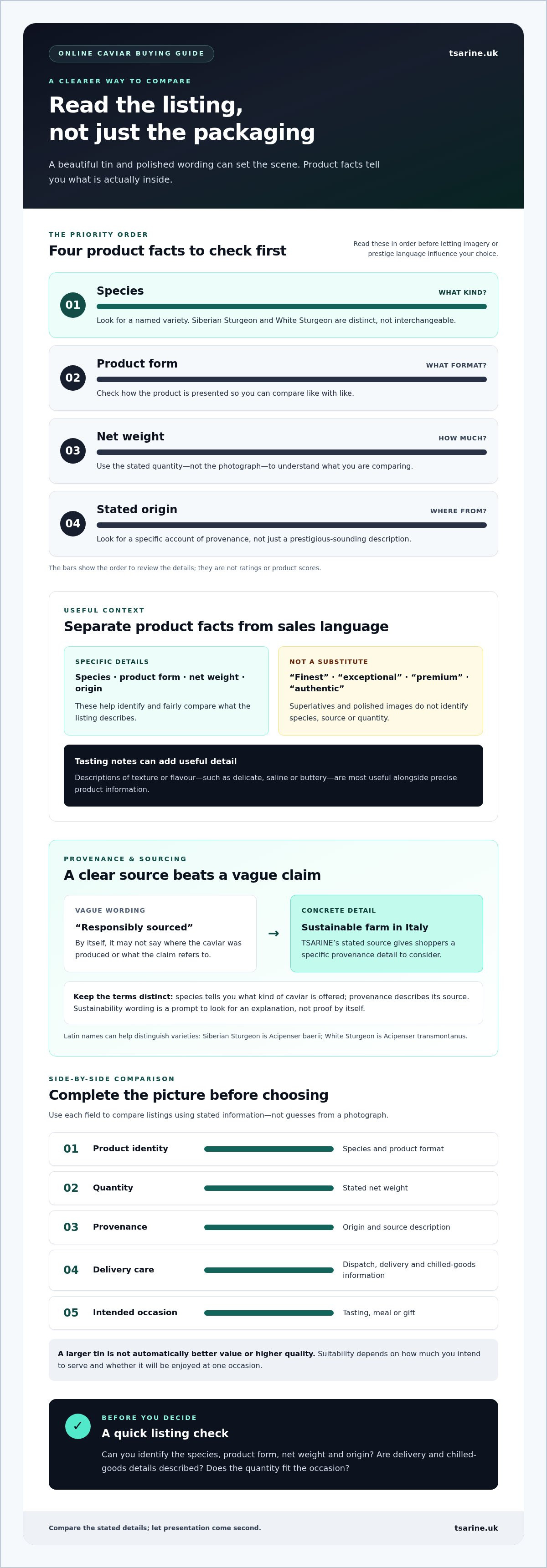
To compare options fairly, look for four basics: species, product form, net weight and stated origin. Two tins described as luxurious aren’t directly comparable if their species or quantities differ. Origin also gives context about the product’s provenance. Tasting notes can add useful detail, such as a delicate texture or saline, buttery character, but superlatives like “finest” or “exceptional” don’t identify the contents. For background on caviar’s traditional meaning and varieties, see Caviar - Wikipedia.
Mistake: assuming every product labelled caviar is the same
Caviar varieties aren’t interchangeable. A named species gives you a meaningful point of comparison, while the word “caviar” alone leaves important questions unanswered. Siberian Sturgeon and White Sturgeon, for example, are clearly identified varieties. To learn more about how different types are distinguished, explore this guide to types of caviar.
Mistake: overlooking the details behind the photograph
Before adding a product to your basket, check the listing for the species, stated origin, net weight and product format. A photograph can show colour, shine and presentation, but it can’t establish the species, source or quantity. Ornate packaging may make a purchase feel ceremonial, but it isn’t a substitute for those details.
Descriptive language still has its place. Notes on firmness, flavour or the appearance of the pearls can help you imagine the tasting experience when they accompany precise product information. Read the description as a whole, and compare like with like before choosing.
A clear caviar listing identifies the species and origin, then gives enough product detail to compare the tin with confidence. This simple standard helps separate useful information from decoration, so your choice is based on more than appearance.
How to assess caviar provenance, species, and sustainability claims
Provenance describes where caviar comes from and how its source is presented. For an online buyer, it turns a grand-sounding label into details you can consider: the species, the stated origin and, where given, whether the source is a farm. Broad words such as “premium” or “authentic” may set a tone, but they don’t tell you these specifics.
A useful sourcing detail names a place or source; a general sustainability statement makes a claim without showing what it refers to. Treat sustainability language as a prompt to read further, not proof by itself. Look for an explanation of the source behind the wording, and don’t assume a certification or standard applies unless the listing identifies it and makes its basis clear.
Mistake: accepting vague origin or sustainability language
“Responsibly sourced” may sound reassuring, yet it leaves questions: where was the caviar produced, and what does the claim describe? A more informative listing pairs a named species with a specific account of origin. TSARINE sources its caviar from a sustainable farm in Italy. This gives shoppers a concrete provenance detail to consider alongside the sustainability wording, rather than relying on an adjective alone.
Mistake: confusing species names and caviar terminology
Species names make comparisons more precise. Siberian Sturgeon, identified as Acipenser baerii, and White Sturgeon, identified as Acipenser transmontanus, refer to distinct varieties, not interchangeable names for one product. Latin names can help distinguish species when common names are unfamiliar. For a concise explanation of the term and its use, read this guide to what caviar is and how it’s defined.
A species name tells you what kind of caviar is being offered, while provenance describes its source. Neither “authentic” nor “sustainable” can stand in for both. As you review a listing, check whether the origin and species are stated plainly and whether any sourcing language explains what it refers to. This helps you avoid common mistakes when buying caviar online and base your choice on information rather than impression.
For a direct example of disclosed sourcing and named sturgeon varieties, explore TSARINE’s Italian-sourced caviar.
Compare online caviar listings by delivery care, tin size, and intended occasion
A considered comparison looks beyond the variety in the tin. When ordering caviar online, the listing should help you understand its quantity, provenance and delivery arrangements, so the practical details feel as clear as the occasion you have in mind. Use this framework to compare options side by side:
| Product identity | Tin size | Provenance | Delivery details | Occasion |
|---|---|---|---|---|
| Species and product format | Stated net weight | Origin and source description | Dispatch, delivery and chilled-goods information | Tasting, meal or gift |
Fill in each column using the product information rather than guessing from photographs or promotional language. A larger tin isn’t automatically better value or higher quality. Its suitability depends on how much you intend to serve and whether the caviar will be enjoyed at one occasion. Compare like with like: identity, quantity and source all shape what the listing describes.
Mistake: overlooking delivery information for a chilled food
Read the delivery details for a clear account of dispatch, delivery arrangements and what to expect when receiving a chilled product. Vague wording can leave practical questions unanswered, such as how delivery is arranged or what guidance accompanies receipt. A lack of detail alone doesn’t establish that a product is unsafe, but it can make planning harder. Don’t assume a particular delivery window, packaging method or temperature control unless the listing or fulfilment information states it. TSARINE provides delivery services throughout the UK and internationally. Review the delivery and handling information provided with your order so you know what to expect.
Mistake: choosing a tin without considering the occasion
For a tasting, consider the stated net weight in relation to the number of people and the experience you’re planning. For a meal, think about how the caviar will be served and whether the quantity suits its role. Tin size is a planning detail, not a verdict on quality. If you’re buying a present, read the page to distinguish the caviar from any presentation or accessories included in the gift format. The guide to luxury caviar gift sets offers further ideas for choosing a presentation suited to the recipient.
Among the common mistakes when buying caviar online is treating delivery and format as afterthoughts. Give each comparison column attention before ordering, and your choice is more likely to suit both the table and the moment you’re creating.
Use this checklist before placing an online caviar order
A calm final review can prevent small mismatches from interrupting a special occasion. Before checkout, compare the product details with what you intend to serve or give, then review the order information.
A five-point review before checkout
- 1. Confirm the identity. Check the product name, named species and format. Make sure they match the caviar you meant to choose.
- 2. Review the origin. Read the stated provenance and make sure you understand what the listing says about its source.
- 3. Compare the size. Check the tin’s stated net weight against your plan for a tasting, meal or gift. Don’t assume a larger tin is automatically better suited to the occasion.
- 4. Examine delivery details. Review the stated delivery arrangements and any handling information on the product page. Storage guidance for after arrival doesn’t replace information about dispatch and delivery.
- 5. Check the order information. Before completing your purchase, review the basket contents, recipient details and delivery address. Revisit the product page if needed to make sure the item ordered still matches the details you compared.
Mistake: ignoring the plan for serving and storage
Think about when you intend to serve the caviar and where you’ll store it after arrival. This helps you prepare for the occasion without making assumptions about universal storage rules. Follow the guidance provided for the product you’ve chosen. For practical post-arrival care, consult this guide to how to store caviar at home.
Serving plans matter, too. Consider how the caviar will be presented and what will make the tasting feel complete, then explore an elegant guide to serving caviar for ideas.
Taking these steps can help you avoid common mistakes when buying caviar online, especially ordering a size or format that doesn’t suit the moment. Ready to compare clearly identified caviar options for your occasion? Explore TSARINE caviar.
Choose TSARINE Caviar with confidence after avoiding these online buying mistakes
A thoughtful choice brings together the details: a clearly identified product, disclosed sourcing, a format suited to your plans and delivery information you can understand. This shifts attention away from prestige language alone and towards what will make the purchase right for your table or the person receiving it.
How TSARINE’s range fits the checklist
TSARINE’s range includes Siberian Sturgeon Caviar (Acipenser baerii) and White Sturgeon Caviar (Acipenser transmontanus), giving shoppers named varieties to compare. TSARINE sources its TSARINE caviar from a sustainable farm in Italy, a specific point of provenance to consider as you read the product details.
For a present, the TSARINE Caviar Luxury Gift Set offers a gift-focused format. Read the product page for details relevant to your plans, including the stated size and presentation. A gift’s appeal may rest on more than the caviar itself, so distinguish the product from any presentation or accessories described.
Make the next step feel simple and considered
Before choosing, ask yourself three questions: does the named variety suit your preferences, does the format fit the occasion, and can you understand the product and delivery information provided? A quick review helps prevent common mistakes when buying caviar online, such as letting presentation overshadow the facts or selecting a tin without considering how it will be enjoyed.
If you’re planning a tasting, focus on the variety and format that suit the experience you have in mind. For a celebration or a present, consider how the product will arrive as part of the occasion and what the listing says about its presentation. The right choice needn’t be complicated; it should feel well matched to your purpose.
Explore the TSARINE Caviar range and compare the product details at your own pace, choosing the variety and format that best suit the moment you wish to create.
Make your next caviar choice with confidence
The common mistakes when buying caviar online often begin when appearance or prestige language overshadows details that help you compare thoughtfully. Check the named species, stated origin and tin size, then read the delivery information and order details with your occasion in mind. These simple steps can help you choose with greater confidence, whether you’re planning a tasting or selecting a gift.
TSARINE sources its caviar from a sustainable farm in Italy, and its range includes Siberian Sturgeon Caviar and White Sturgeon Caviar. For a present, the Tsarine Caviar Luxury Gift Set offers a dedicated gift option. Explore the product details and consider which variety and format feel right for the experience you wish to create.
Explore TSARINE Caviar’s range and make your next choice with care, clarity and a little anticipation.
Frequently Asked Questions
Is it safe to buy caviar online?
It can be a straightforward purchase when the product information is clear and the delivery arrangements for this chilled food are explained. Before ordering, review the species, stated origin, tin size and any handling details. Polished photographs and luxury language can’t replace practical information. Once your order arrives, follow the storage guidance provided for that specific product rather than relying on assumptions about how caviar should be kept.
How can I tell if online caviar is authentic?
Start by checking whether the listing clearly names the sturgeon species, origin and product format. These details offer a more useful basis for comparison than broad claims such as “premium” or “authentic” on their own. Common mistakes when buying caviar online include treating persuasive language as proof of identity. If a species name or term is unfamiliar, consult a reliable guide and check that the product description is consistent throughout the page.
What should I check before ordering caviar online?
Check the named species, stated origin, net weight or tin size, and delivery information before adding a product to your basket. Consider whether the format suits your planned meal, tasting or gift, then review the basket contents and delivery address before completing the order. Reading the listing carefully helps you understand what you’re buying and reduces the chance of a mismatch between your expectations and the product details.
Can caviar be delivered safely in the UK?
TSARINE provides delivery services throughout the UK. Because caviar is a chilled food, read the stated dispatch and delivery arrangements, including when the parcel is expected and any instructions for receiving it. Don’t assume a particular packaging method, delivery window or guarantee unless the seller states it. On arrival, follow the storage guidance for the specific product and use the published instructions if you have questions about handling.
Does caviar origin matter when buying online?
Yes. Origin tells you where the product comes from, while the species identifies the sturgeon variety, so both details help you compare listings more clearly. Specific sourcing information provides more context than general descriptions such as “premium” or “exclusive”. Treat broad sustainability wording as a reason to look for details about the source, not as proof by itself. TSARINE sources its caviar from a sustainable farm in Italy.
How much caviar should I buy for a tasting or gift?
The right amount depends on how many people will share it, how you plan to serve it and whether it’s part of a larger meal. Compare the stated net weight on each listing with your intended occasion rather than choosing by tin size alone. For a gift, consider both the caviar and the presentation described on the page. A serving guide can help you plan portions for the experience you have in mind.
What happens if caviar arrives warm or the parcel is delayed?
Start with the delivery and product guidance provided for your order, since handling instructions can differ. If the parcel’s condition seems inconsistent with those instructions, keep the order details and follow the published customer-service process promptly. Avoid guessing about storage or product quality, and don’t rely on general advice in place of guidance for that specific purchase. Clear delivery information can help you understand what to expect before placing the order.