
How to Chill and Plate Steak Tartare with Caviar
Caviar doesn’t need to overwhelm steak tartare; a restrained finish lets the beef’s clean, savoury character remain at the centre. For a caviar and steak tartare recipe, begin with 200g of very fresh beef tenderloin or sirloin and finish with 30g of caviar. Keep the beef cold, then season it gently with extra virgin olive oil, salt and pepper.
The pleasure of this dish lies in its balance: finely cut beef, delicate seasoning and the cool, briny pop of caviar, brought together just before serving. This guide walks you through preparing and chilling the tartare, adjusting the seasoning without masking the ingredients, and shaping and plating it with care. You’ll also find simple serving ideas that let each element shine. With thoughtful handling and an elegant finishing touch, a few carefully chosen ingredients become a striking centrepiece for a special meal.
Key Takeaways
- Choose 200g of very fresh beef tenderloin or sirloin, trimmed of fat and sinew, and hand-chop it for a pleasing texture.
- Keep the diced beef chilled over crushed ice while preparing the other ingredients, and use clean utensils.
- Season gently with extra virgin olive oil, salt and pepper so the beef’s flavour remains distinct.
- Shape the tartare neatly and add 30g of caviar just before serving for a delicate, briny finish.
- Serve promptly with a crisp or lightly toasted accompaniment, keeping the presentation simple and elegant.
Ingredients and quantities for beef tartare
Prepare beef tartare with very fresh beef, finely chopped aromatics and measured seasoning, then add caviar as a delicate finishing touch. When serving raw beef at home, choose meat from a reputable butcher, use clean utensils and keep it refrigerated until serving. Don’t serve it to anyone who is sick or immunocompromised.
-
Chill and Hand-Chop the Beef
Keep the beef very cold before cutting so it stays firm and easier to handle. Trim away all fat and sinew, then use a sharp knife to chop the meat by hand into small, even pieces. Avoid a food processor: its blades can turn the beef pulpy, losing the distinct, tender texture that gives tartare its character.
-
Gather Beef Tartare Ingredients
Measure the ingredients before chopping the aromatics, so the beef stays cold and assembly is deliberate. This quantity makes a composed tartare portion with a bright, savoury balance:
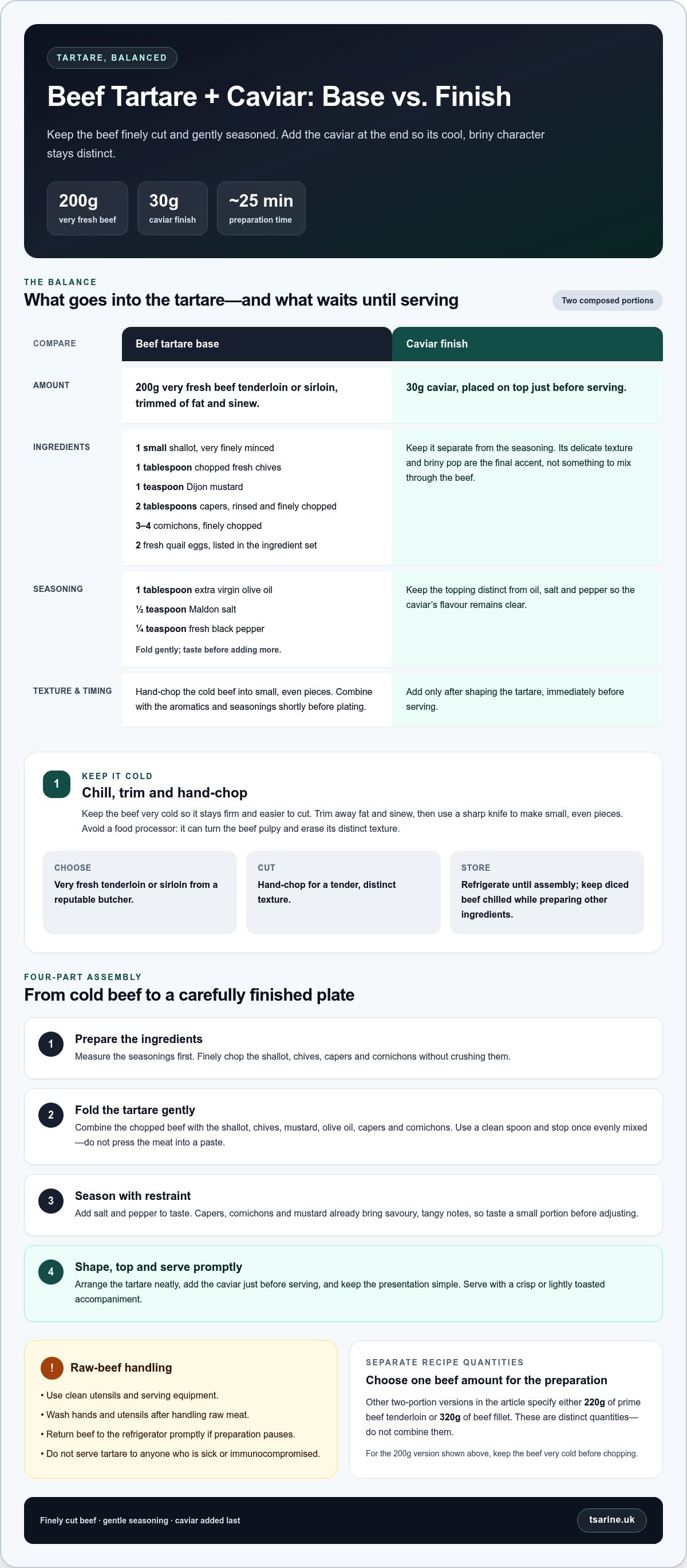
- 200g very fresh beef tenderloin or sirloin, trimmed of fat and sinew
- 30g caviar for the topping
- 2 fresh quail eggs
- 1 small shallot, very finely minced
- 1 tablespoon finely chopped fresh chives
- 1 teaspoon Dijon mustard
- 1 tablespoon extra virgin olive oil
- 2 tablespoons capers, rinsed and finely chopped
- 3-4 cornichons, finely chopped
- With a clean knife, finely chop the shallot, chives, capers and cornichons without crushing them. Their varied textures bring gentle sweetness, freshness and acidity to the beef. Measure the mustard and olive oil separately so you can season in controlled amounts without obscuring the meat’s flavour.
- Just before serving, combine the chopped beef with the shallot, chives, mustard, olive oil, capers and cornichons. Fold gently with a clean spoon to distribute the ingredients evenly without pressing the meat into a paste. Season with salt and pepper to taste, then arrange the tartare neatly and place the caviar on top.
- Keep the prepared beef refrigerated until assembly, and return it to the cold promptly if preparation pauses. Wash your hands and utensils after handling raw meat, and use clean serving equipment for the finished dish. Because tartare is served raw, careful handling and prompt service are essential. Choose a cut with little sinew and keep the pieces distinct for a refined, hand-cut finish.
For two portions of hand-cut tartare, one recipe uses 220 gr of prime beef tenderloin, while another uses 320g of beef fillet. These are distinct ingredient quantities, so follow the amount specified for the preparation you choose rather than combining them. At home, the recipe recommends good-quality local beef; chef Marco Stabile uses Fassone Piedmontese beef in his restaurant. Whichever cut you select, keep the beef very cold before chopping to make it easier to cut.
Hand-chop the beef instead of using a food processor, which can pulp the meat and spoil its distinct texture. Since the dish is raw, choose beef from a reputable butcher, use clean utensils and keep the meat refrigerated until serving. These steps help preserve the hand-cut texture and support careful handling from preparation through service.
Seasoning with olive oil, salt and pepper
For 200g of beef tartare, season with 1 tablespoon of extra virgin olive oil, ½ teaspoon of Maldon salt and ¼ teaspoon of fresh black pepper. Mix gently, taste before adding more, and keep the caviar topping distinct from the seasoning.
If serving tartare without caviar, capers or cornichons can add a savoury, briny accent. They won’t replicate caviar’s delicate texture, so use them as flavourful garnishes rather than exact substitutes.
- Measure the seasoning. Set out 1 tablespoon of extra virgin olive oil, ½ teaspoon of Maldon salt and ¼ teaspoon of fresh black pepper. Measuring first helps you distribute each element evenly instead of concentrating salt or pepper in one bite. Use finely chopped beef, as its small pieces take seasoning more consistently than large chunks.
- Add olive oil gradually. Drizzle the tablespoon of oil over the beef, then fold with a spoon. The oil should lightly coat the pieces, lending a smooth finish without making the mixture greasy. Avoid vigorous stirring, which can compress the hand-cut texture. Keep the mixture cool as you work, and stop folding once the oil is evenly distributed.
- Season with salt in stages. Add the measured Maldon salt and fold gently to distribute it. Capers, cornichons and Dijon mustard already bring savoury, tangy notes, so taste a small portion before adding extra salt. This gradual approach preserves the contrast between the beef’s clean flavour and the sharper condiments.
- Introduce black pepper carefully. Add ¼ teaspoon of freshly ground black pepper, then fold the mixture once more. Pepper’s aromatic warmth should complement the beef, not dominate it. If you’re preparing the tartare with finely minced shallot and chives, taste their combined effect before adjusting. Both add character without requiring a heavier hand.
- Balance the condiments. Mix in the Dijon mustard, chopped capers and cornichons evenly, keeping their quantities measured. Mustard adds pungency, while capers and cornichons contribute briny acidity. Taste a small spoonful, then make modest adjustments to salt or pepper only if the flavours seem unbalanced. Don’t add more oil automatically.
- Finish before serving. Fold the seasonings through the beef shortly before plating, then leave the caviar for the final garnish. That separation keeps its delicate flavour and texture distinct from the oil, salt and pepper. For a caviar-led finish, Siberian Sturgeon Caviar offers a considered choice for the plate.
Serving suggestions
Allow about 25 minutes to prepare this hand-cut tartare, and serve it as two composed portions. Arrange the accompaniments before shaping the beef, so the caviar can be added at the final moment.
- Choose a crisp accompaniment. Serve each portion with Melba toast, thin toasted brioche or plain blinis. Their light crunch contrasts with the tender beef, while a neutral base lets the caviar’s briny character stand out. Set the toast or blinis beside the tartare rather than underneath it, so they retain their texture until guests are ready to eat.
- Keep the plate uncluttered. Shape the beef into a neat round, then place the caviar on top shortly before serving. Leave a little space around the tartare for the toast and any extra finely chopped chives. A simple arrangement makes the dark pepper, green herbs and glossy caviar visible without crowding the plate.
- Offer a chilled pairing. Chilled Champagne or Blanc de Blancs brings a bright, celebratory note to the dish. For another classic pairing, serve ice-cold vodka in small glasses. Keep the drinks cold and pour them just before eating, so their freshness complements rather than overwhelms the seasoned beef.
- Set the table for immediate service. Put out clean forks, small plates and the chosen accompaniment before bringing out the tartare. Since the beef is served raw, keep it refrigerated until the last practical moment and serve it promptly. Don’t leave the finished dish standing while guests settle in or drinks are poured.
- Make each bite balanced. Encourage guests to take a little beef, caviar and toast together, rather than spreading caviar across every piece. This preserves the contrast between the finely chopped meat and the delicate topping. If serving finely ground black pepper at the table, offer it separately so each guest can adjust their portion.
- Plan portions before preparing. The two-portion serving described here uses 200g of beef and 30g of caviar as a topping. For a larger gathering, scale the ingredient quantities to match the number of diners and keep the tartare chilled while arranging each plate. Prepare only what can be served promptly, rather than plating portions far ahead.
- Finish the presentation with restraint. Add the caviar after shaping, and keep extra sauces or strong garnishes away from its surface. The mustard, capers and cornichons already bring savoury and tangy notes. A small flourish of chives and carefully placed toast make the plate feel complete without hiding the ingredients.
Chilling and plating tartare
Prepare tartare close to serving, keeping the beef refrigerated until then. A bowl set over crushed ice helps keep the diced meat cold during preparation. Assemble and plate it promptly rather than preparing it well ahead.
-
Chill the Prepared Tartare
Set the bowl of diced beef over crushed ice while preparing the remaining ingredients, and keep it there as you combine them. The cold helps the meat stay firm for mixing and plating. Use clean utensils, and return the bowl to the refrigerator if preparation pauses. Keep the tartare chilled until you’re ready to shape and serve it.
-
Plate the Chilled Tartare
Use a clean plate and, if desired, a pastry ring about 6-7 cm in diameter to shape each portion. Fill the ring a little more than ¾ full, then lift it carefully to leave a neat edge. Add the caviar as the final garnish, and place toast or blinis alongside rather than beneath the beef.
-
Plan Ahead and Store Tartare
Keep the beef refrigerated until serving, and avoid mixing the finished tartare long before plating. Since no storage duration is given for prepared raw tartare, plan to serve it promptly rather than relying on a make-ahead holding period. To organise in advance, prepare the serving plates and accompaniments first.
- Arrange the work area first. Set out the chilled bowl, clean knife, serving plate and pastry ring before combining the beef. This order reduces interruptions while the raw meat is out of refrigeration. Keep garnishes such as chives and caviar separate until plating, so you can place them neatly without repeatedly handling the tartare.
- Shape without compressing. Spoon the mixture into the ring and gently level the top with the back of a spoon. Don’t press hard: a light touch preserves the texture of hand-cut beef. Slide the ring upwards in one smooth motion, then check the edge and tidy stray pieces with a clean utensil.
- Serve the finished plate promptly. Add the caviar after shaping, then bring the plate to the table with Melba toast, toasted brioche or plain blinis. Keep the accompaniments close, but don’t cover the tartare or leave it at room temperature while arranging the table. Prompt service preserves the dish’s carefully composed presentation.
The recipe recommends keeping the diced beef in a bowl set over crushed ice while preparing the tartare. Maintain this arrangement as you work, following the recipe’s chilling approach throughout preparation.
Steak tartare with caviar
Sturgeon caviar is a graceful match for steak tartare, bringing a delicate, briny contrast to savoury beef. A caviar and steak tartare recipe succeeds through restraint: keep the topping distinct and sharper additions measured.
- Keep the beef’s flavour central. For 200g of hand-cut beef, use the caviar as a finishing accent rather than stirring it through the mixture. A little olive oil and measured seasoning help the meat retain its own character. This balance is especially useful when serving tartare as a starter, where each bite should bring both beef and garnish into focus.
- Balance capers thoughtfully. The recipe’s 2 tablespoons of rinsed, finely chopped capers contribute a savoury, tangy note. Since capers and caviar both bring briny flavours, taste the beef mixture before adding extra salt. Keep the capers finely cut and evenly dispersed, so their acidity complements the caviar instead of becoming the dominant flavour.
- Shape before garnishing. Form the tartare into a neat round on a chilled serving plate, then add the caviar once the shape is set. A pastry ring can help create a clean edge, but lift it gently to avoid compressing the beef. Adding the topping last gives the finished dish a clear visual centre and makes it easy to portion.
- Place the caviar with care. Use a spoon to lay the caviar lightly over the tartare rather than mixing or pressing it into the surface. This preserves the distinction between the hand-cut beef and the delicate topping. A small centred mound or a fine layer both work; choose an arrangement that makes it easy to include some caviar in each serving.
- Choose a restrained accompaniment. Plain blinis, Melba toast or thin toasted brioche provide a simple accompaniment to the tartare. Keep them beside the beef, not beneath its caviar garnish, so they retain their texture. A modest scattering of chopped chives adds colour; avoid crowding the plate with extra capers or strong sauces.
- Serve promptly and savour the contrast. Bring the dish to the table soon after garnishing, with clean serving utensils and accompaniments ready. Invite guests to try a small bite of beef and caviar together, then adjust the balance on the next mouthful. For a caviar and steak tartare recipe, this deliberate final assembly lets both ingredients express their character.
TSARINE Caviar: Tsarine Caviar Luxury Gift Set
The TSARINE Caviar Luxury Gift Set offers a considered way to bring caviar to a special meal or give it as a present. For your caviar and steak tartare recipe, TSARINE Caviar also offers Siberian Sturgeon Caviar (Acipenser Baerii) and White Sturgeon Caviar (Acipenser Transmontanus), giving you two options for the dish’s delicate, savoury finish. Both caviars come in vacuum-sealed metal tins.
For a larger order, Wholesale Caviar Orders serve businesses planning caviar-led menus or events. Choose the offering that suits your occasion, whether you’re preparing tartare at home, selecting a refined present or arranging a wholesale order.
To explore these caviar offerings, visit tsarine.uk.
Make Your Next Table a Celebration
Let this caviar and steak tartare recipe inspire a more personal way to host, where a considered ingredient gives an intimate supper or festive gathering a sense of occasion. Choose a finishing touch to suit the moment: a thoughtful gift for a fellow food lover, caviar to enjoy at home or a larger order for a hospitality setting.
TSARINE Caviar offers the Tsarine Caviar Luxury Gift Set, Siberian Sturgeon Caviar (Acipenser Baerii) and Wholesale Caviar Orders. Each offers a distinct next step, whether you’re choosing a present, planning a meal or sourcing caviar for a business. Let the occasion guide your selection, and allow the caviar to take its place naturally at the table. Caviar is packed in vacuum-sealed metal tins.
Contact TSARINE Caviar today to explore the possibilities, and bring a little more ceremony to your next gathering.
Frequently Asked Questions
What ingredients and quantities are needed for steak tartare with caviar?
For two portions, use 200g trimmed beef tenderloin or sirloin and 30g caviar. Add 2 fresh quail eggs, 1 small finely minced shallot, 1 tablespoon chopped chives, 1 teaspoon Dijon mustard and 1 tablespoon extra virgin olive oil. Include 2 tablespoons finely chopped capers and 3-4 chopped cornichons. Season with salt and pepper. Measure everything before combining, so you can adjust the savoury ingredients without overwhelming the beef.
How do you prepare and serve steak tartare with caviar step by step?
Chill the beef, trim away fat and sinew, then hand-chop it with a sharp knife. Finely chop the shallot, chives, capers and cornichons. Gently combine the beef with the measured oil, mustard and seasonings, then taste and adjust. Shape the mixture on a plate, add caviar as the final garnish, and serve promptly with Melba toast, brioche or plain blinis. Keep raw beef refrigerated until preparation and use clean utensils.
Which cuts of beef are best for steak tartare?
Tenderloin is a suitable choice for its tenderness, while trimmed, fatless sirloin offers another option. Rib eye can also work when carefully trimmed of fat and sinew. Choose a very fresh piece from a reputable butcher, then hand-chop it with a sharp knife. Avoid cuts with tough connective tissue, which can leave chewy pieces in the finished tartare. Keeping the meat cold makes it easier to cut cleanly.
How much steak tartare and caviar should you serve per person?
A recipe using 200g of beef and 30g of caviar makes two servings, equal to 100g of beef and 15g of caviar per person. This is a useful guide for serving tartare as a starter; adjust the accompaniments to suit the meal. Melba toast or blinis add a crisp base without requiring more beef. Keep the caviar as a finishing garnish, rather than mixing it throughout the dish.
How do you safely handle and store raw beef and caviar?
Buy very fresh beef from a reputable butcher, keep it refrigerated until preparation, and handle it with clean hands and utensils. Serve the tartare promptly, and don’t serve raw beef to anyone who is sick or immuno-compromised. Keep caviar in its original packaging in the coldest part of the fridge, preferably at -2°C to +2°C, and consume it promptly after opening. Serve the caviar cold, over ice if desired.
Can steak tartare be prepared ahead, and how long can it be kept?
Prepare it close to serving and keep it refrigerated until then. Once assembled, serve it promptly rather than holding it.