
What is Caviar? A Connoisseur’s Guide to the Jewel of the Sea
Imagine a delicacy so rare that she requires nearly two decades of patient stewardship before she reveals her secrets to the world. To the casual observer, the term might encompass any salted roe, yet for the true seeker of elegance, the question of what is caviar finds its only answer in the pristine eggs of the sturgeon. You've perhaps felt the quiet anxiety of distinguishing between a simple fish egg and a genuine treasure, or perhaps you've worried if your pursuit of luxury might come at the cost of our natural environment. We understand that true indulgence requires both absolute clarity and a clear conscience.
This guide invites you to discover the regal history, artisanal craft, and sensory opulence that define authentic sturgeon caviar. We'll unveil the nuances of the Malossol method, explore the transition from wild waters to sustainable Italian sanctuaries, and help you select the finest Siberian and White Sturgeon varieties for your next celebration. By the journey's end, you'll possess the confidence of a true connoisseur, ready to identify premium brands and distinguish between exquisite varieties with grace and expertise.
Key Takeaways
- Discover the precise definition of what is caviar, distinguishing the authentic salt-cured roe of the noble sturgeon from common varieties to ensure a truly regal experience.
- Explore the unique character of various sturgeon lineages, including the bold, earthy notes of Siberian Baerii and the sophisticated, buttery profile of White Sturgeon.
- Learn to appreciate the Malossol method, an artisanal curing tradition that uses "little salt" to unveil the delicate, unmasked flavours of the sea.
- Master the sensory expectations of premium caviar, from its fresh, briny aroma to the signature firm texture that yields gracefully to a creamy, liquid heart.
- Identify the markers of sustainable luxury, ensuring your indulgence supports ethical Italian farming practices and the vital conservation of these ancient species.
Defining the Jewel: What is Caviar Exactly?
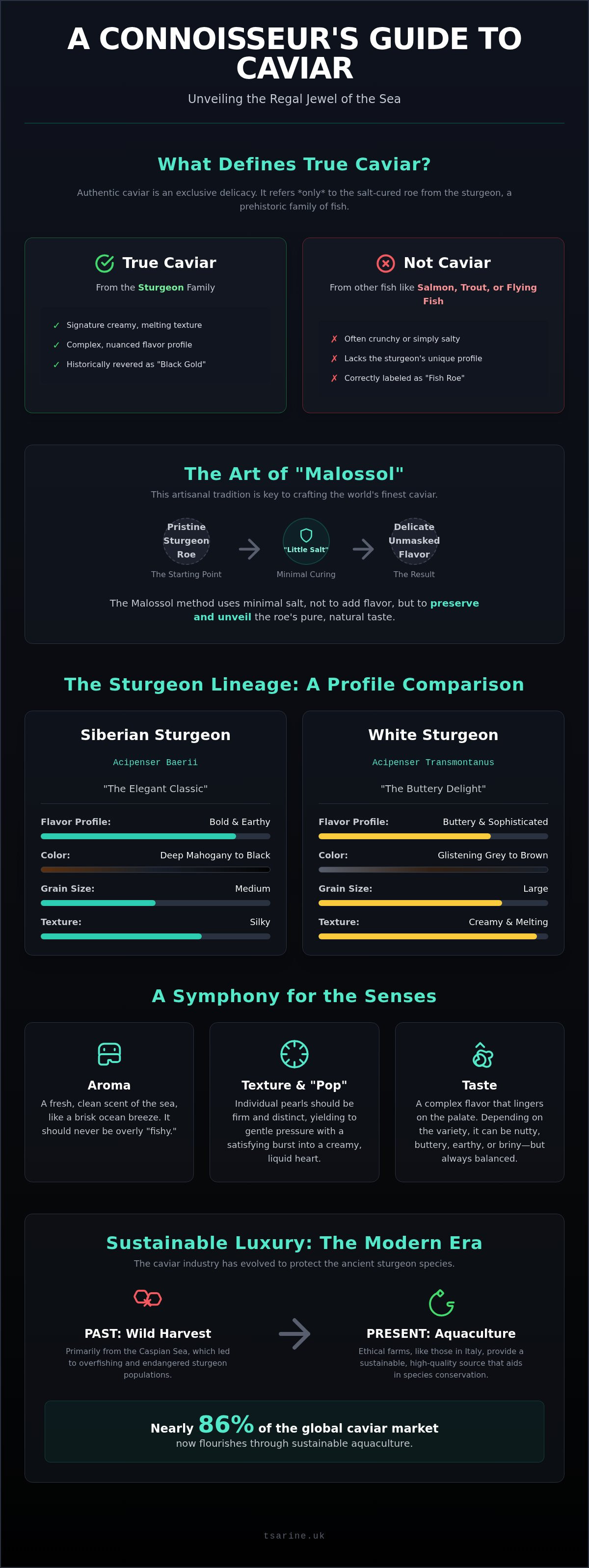
To truly grasp what is caviar, one must appreciate it as a salt-cured masterpiece where the raw bounty of the sturgeon meets centuries of artisanal patience. While the term is often whispered in the same breath as luxury, it specifically refers to the roe of the Acipenseridae family, a noble lineage of fish that has graced our waters since prehistoric times. It's a harmonious blend of nature's untamed spirit and the meticulous craft of the master curer. In the grand tapestries of history, these delicate pearls were revered as "Black Gold," a treasure so rare it was often reserved for the private tables of emperors and tsars. This status wasn't merely a result of scarcity but a tribute to the sensory journey each pearl offers, reflecting a world of prestige and quiet grace.
The Distinction Between Caviar and Fish Roe
While the culinary world uses the word "roe" to describe the eggs of any marine creature, true caviar remains an elite subset of this category. You might encounter the vibrant orange of salmon roe or the tiny, crunchy spheres of flying fish roe at a contemporary banquet, but these are distinct entities that lack the sturgeon's pedigree. Authentic caviar possesses a unique biological complexity found only in the sturgeon, resulting in a signature creamy texture that melts with a gentle pressure against the palate. For those seeking to refine their selection and avoid the confusion of lesser alternatives, our guide for London foodies delves deeper into the nuances that separate the everyday from the extraordinary. It's this specific heritage that ensures every tin of Siberian or White Sturgeon provides an encounter with high art rather than mere sustenance.
A Brief History of Regal Indulgence
The story of this delicacy begins on the ancient Persian shores, where it was first harvested for its supposed medicinal virtues before finding its way into the opulent Russian Imperial courts. By the time it reached the grand dining rooms of Victorian London, it had become the ultimate symbol of status and refined taste. To understand what caviar is today, one must acknowledge this journey from the wild, windswept depths of the Caspian Sea to the sophisticated, sustainable artisanal farms of modern Italy. This evolution ensures that the same grace and prestige enjoyed by royalty centuries ago can be savored today with an unwavering commitment to the preservation of the species. The transition to ethical aquaculture has not diminished the soul of the product; instead, it has allowed the artisanal heritage to flourish in a world that values both tradition and the future of our oceans.
The Sturgeon Lineage: Varieties of the Exquisite
Just as a sommelier distinguishes between the unique terroirs of grand cru vineyards, a true enthusiast understands that the soul of the experience resides within the specific lineage of the fish. While we've already established that the official definition of caviar remains strictly tied to the sturgeon, the vast diversity within the Acipenseridae family creates a spectrum of sensory delights. Each species brings her own character, color, and texture to the table, making the question of what is caviar a gateway to a much larger world of discovery. To appreciate these nuances is to move beyond mere consumption and into a space of high-art appreciation, where every pearl tells a story of her origin.
Siberian Sturgeon: The Elegant Classic
The Siberian Sturgeon, known scientifically as Acipenser Baerii, represents the elegant classic of the caviar world. Her pearls, ranging from deep mahogany to midnight black, possess a medium-sized grain that feels incredibly silky upon the tongue. This variety is celebrated for a bold, earthy profile that carries a clean finish and subtle notes of the sea, making it the preferred choice for those who long for the traditional, intense experience of a historic banquet. It's a profile that speaks of heritage and strength, perfect for a refined evening of storytelling where the bold character of the roe can truly shine. With nearly 86% of the global market now flourishing through sustainable aquaculture, the Baerii has become a bastion of consistent, high-tier quality.
White Sturgeon: The Buttery Delight
In contrast, the White Sturgeon, or Acipenser Transmontanus, offers a buttery delight that is as sophisticated as it is indulgent. Though native to the wild waters of North America, she has been perfected through artisanal Italian farming, where the pristine environment allows her to develop large, glistening pearls. These pearls boast a creamy texture that melts effortlessly, releasing a delicate flavor profile that pairs beautifully with a glass of chilled prestige cuvée. It's a more feminine, graceful expression of the sea's bounty, inviting a slower pace of enjoyment. The large size of the grain provides a visual opulence that makes it a centerpiece of any celebratory table, evoking a sense of regal magnificence.
Understanding these types of caviar is essential for any modern connoisseur who wishes to curate a truly memorable tasting. Whether you prefer the intensity of the Siberian or the buttery softness of the White Sturgeon, the choice reflects your personal journey through this world of sensory opulence. For those ready to begin their own exploration, a finely curated selection of sturgeon caviar provides the perfect introduction to these exquisite lineages, bridging the gap between historical prestige and modern sustainable craft.
The Art of Malossol: How Caviar is Crafted
The creation of this delicacy is a quiet alchemy where the sturgeon's gift is transformed through the revered Malossol method. Derived from the Russian phrase for "little salt," Malossol isn't merely a technical term but a philosophy that ensures the delicate, nuanced flavors of the roe remain unmasked by excessive seasoning. Artisans meticulously sieve and rinse the roe by hand with a touch that mirrors the gentlest caress, preserving the integrity of each individual pearl. It's a dance of precise timing; the salt must draw out the complex aromas and firm the exterior without overwhelming the liquid heart of the grain. To understand what is caviar in its most refined state, one must appreciate this artisanal patience, where every second of curing contributes to the final sensory opulence.
The Sustainable Harvest
Modern excellence is born from a commitment to the earth, shifting away from the historical over-exploitation of wild stocks that once threatened these noble creatures. Today, the finest sturgeons are raised in the pristine, oxygen-rich Italian spring waters that mimic their ancestral habitats with remarkable fidelity. As University of Florida researchers explain, the transition to sustainable aquaculture has been vital for the survival of these ancient species, ensuring that the legacy of the jewel of the sea continues for future generations. This ethical evolution is at the heart of TSARINE Caviar, where a closed-loop system in Italy provides an environmentally responsible foundation for every tin. It's a world where luxury and conservation exist in a seamless, elegant embrace.
The Grading Process
The final journey of the grain is guided by the discerning eye of the Caviar Master, an authority who treats each harvest as a work of art. Pearls are graded with exhaustive care, focusing on the visual beauty of their color, the consistency of their size, and the clarity of the signature "pop" that occurs when the grain is pressed against the palate. High-tier luxury is defined by this uniformity; a tin filled with perfectly matched pearls suggests a level of technical mastery that only the most prestigious houses can achieve. Firmness is equally paramount, as the grain must maintain its shape until the very moment it releases its creamy interior, offering a rhythmic, melodic experience that lingers long after the final taste. This rigorous selection process ensures that only the most exquisite expressions of the sturgeon's lineage reach the connoisseur's table.
The Sensory Experience: Taste, Texture, and the 'Pop'
To truly understand what is caviar, one must transcend technical definitions and enter a world of pure sensory theater. A premium tin reveals pearls that should never carry a "fishy" scent; instead, they evoke the fresh, briny breeze of a distant sea, whispering of cold, pristine depths and ancient origins. The texture is a masterclass in delicate balance, offering a firm, resilient exterior that provides a brief moment of resistance before yielding to a creamy, liquid heart. This is the legendary "pop," an ephemeral burst of life against the palate that releases the soul of the sturgeon in a single, magnificent instant. When you ask what is caviar in its most poetic sense, it's this rhythmic interplay of tension and release that defines the experience.
As the roe matures, it develops a character of profound depth, where the initial salinity gives way to a silken embrace of toasted hazelnuts and clarified butter. It's a rich, fatty indulgence that coats the tongue with the grace of a noble silk gown, leaving behind a lingering warmth that feels both ancient and celebratory. This buttery, nutty undertone is the hallmark of aged sturgeon roe, a flavor profile that rewards the patient connoisseur with layers of complexity that mirror the years of stewardship required to produce such a treasure.
The Visual Allure of the Pearls
The encounter begins long before the first taste, as the eyes feast upon a display of edible jewelry. From the midnight obsidian and charcoal hues of the Siberian roe to the warm amber and golden glints found in the White Sturgeon, each variety offers a unique visual story. A critical marker of quality is the "glisten," a luminous sheen that reflects the presence of healthy, natural oils and the absolute freshness of the harvest. When light interacts with these glistening spheres, it creates a dancing mosaic of shadows and highlights, transforming a simple serving into a regal centerpiece. This visual opulence is a primary identifier of technical mastery, suggesting that the pearls have been handled with the reverence they deserve.
Flavour Profiles: From Brine to Butter
The journey across the palate is a melodic progression that starts with a bright, clean note of sea salt, reminiscent of the ocean's spray. This initial clarity quickly evolves into a complex mid-palate where the fat content of the sturgeon roe manifests as a rich, buttery, and often nutty profile that lingers with a quiet authority. The finish should always be impeccable, leaving the mouth feeling refreshed rather than weighed down by metallic or overly oily residues. You can discover more about the nuances of this ritual in our guide on how to eat caviar, which explores the traditional etiquette and ideal accompaniments for these treasures. To ensure your next celebration is graced with this level of sensory perfection, we invite you to browse our signature caviar selections and find the variety that speaks to your unique taste.
Sustainable Luxury: Caviar in the Modern Era
In this contemporary era of refinement, the discerning enthusiast understands that the true allure of the jewel of the sea is found not only in her exquisite taste but in the absolute integrity of her origin. The evolving narrative of what is caviar has shifted from the wild, often uncertain depths of the past to a sophisticated era of stewardship, where CITES regulations serve as a vital anchor for the conservation of the sturgeon species. By transitioning from wild-caught scarcity to the meticulous care of sustainable Italian aquaculture, the industry has become a beacon of environmental grace, ensuring that the regal magnificence of the sturgeon is preserved for the grand celebrations of future generations. This ethical lineage is the foundation of the TSARINE Caviar commitment to the London luxury market, where every tin reflects a transparency and a quiet dignity of responsible craft.
The contemporary definition of what is caviar must now encompass the transition from traditional Russian heritage to modern, sustainable Italian farming. This shift hasn't diminished the soul of the delicacy; rather, it has elevated it by providing a sanctuary where the sturgeon can thrive in environments that mirror their ancestral habitats with remarkable fidelity. This commitment to conservation ensures that the sensory journey we've explored, from the delicate pop to the buttery finish, remains an accessible high-art encounter for those who value both prestige and the preservation of the natural world.
Why Sustainability Matters for Flavour
The pursuit of sustainable luxury is as much a culinary choice as it is a moral one, for the controlled environments of modern farms allow for a level of consistency that wild waters can rarely match. When sturgeons are raised in pristine, oxygen-rich Italian spring waters, they remain free from the environmental pollutants that can mar the delicate profile of the roe, allowing the natural, buttery notes to emerge with crystalline clarity. There's a direct, poetic link between the sturgeon’s carefully curated diet and the final, nutty mid-palate that we've come to adore; it's a testament to the fact that when we treat nature with reverence, she rewards us with her most opulent gifts. Ethical luxury is the only path forward, ensuring this ancient treasure continues to grace our tables with her presence.
Bringing the Imperial Tradition to London
Identifying authentic, sustainably farmed sturgeon caviar in the UK requires an eye for detail and an appreciation for the artisanal heritage of the founding houses. As London’s high-end culinary scene continues to champion the values of responsible indulgence, the city has become a vibrant stage for the modern imperial tradition. To navigate this world of prestige and ensure your selection meets the highest standards of both elegance and ethics, we invite you to explore our London buying guide for insights into local delivery and wholesale options. Whether you're hosting an intimate gathering or a grand festivity, choosing an ethically sourced Siberian or White Sturgeon variety ensures that your encounter with high art is as sustainable as it is unforgettable.
Begin Your Journey into Sensory Opulence
Choosing to understand what is caviar is the first step toward a more refined culinary journey, one where the raw bounty of the sturgeon is transformed into a salt-cured masterpiece of heritage and grace. We've explored how the noble Siberian and White Sturgeon lineages offer a spectrum of buttery and earthy delights; each pearl is meticulously crafted through the time-honored Malossol method to ensure an unmasked sensory encounter. This modern era of indulgence proves that true luxury is inseparable from the ethics of the farm, where sustainable Italian sanctuaries protect the future of these ancient creatures while delivering consistent, high-art quality to your table.
To bring this imperial tradition into your own home, we invite you to Experience the Sublime: Shop TSARINE Caviar’s Sustainable Collection. With our exquisite luxury gift sets and the convenience of next-day London delivery, the prestige of the tsars is now within your reach. Every tin is a testament to our commitment to ethical sourcing from Italian farms and artisanal mastery, promising a celebration that is as responsible as it is unforgettable. Step into this world of regal magnificence and let the jewel of the sea reveal her secrets to you.
Frequently Asked Questions
Is caviar eaten raw or cooked?
Caviar is traditionally savored in its raw, salt-cured state to preserve the delicate integrity of each individual pearl. Heating the roe would compromise the intricate texture and mask the subtle nuances of the sea that we strive to protect. It's best served chilled, ideally nestled upon a bed of crushed ice to maintain its pristine temperature, ensuring the sensory experience remains exactly as the artisan intended for such a regal delicacy.
Why is caviar so expensive compared to other fish eggs?
The prestige of this delicacy is rooted in the immense patience required for its creation, as a sturgeon often takes between seven and twenty years to reach maturity. This long-term stewardship, combined with the meticulous artisanal hand-curing and strict international regulations, creates a rare treasure. Unlike common fish eggs, every tin represents decades of dedication and a commitment to sustainable excellence that justifies its position at the pinnacle of luxury; this level of professionalism is also reflected in the high standards of the retail sector, where vocational providers like axiomcollege.com.au prepare individuals to handle and present such exquisite goods with the care they deserve.
What is the difference between caviar and roe?
While the term roe encompasses the eggs of any marine creature, the question of what is caviar finds its only true answer in the salt-cured pearls of the sturgeon. Roe is a broad culinary category that includes varieties like salmon or trout, yet these lack the biological complexity and regal heritage of the Acipenseridae family. Caviar remains the most refined expression of this category, distinguished by its unique creamy texture and historical status.
What fish does real caviar come from?
Authentic caviar is sourced exclusively from the sturgeon, a noble family of fish known scientifically as Acipenseridae. Within this lineage, species such as the Siberian (Acipenser Baerii) and the White Sturgeon (Acipenser Transmontanus) are prized for the distinctive character of their roe. Any product derived from other species is officially considered a substitute, as they can't replicate the sophisticated flavor profile and artisanal heritage that define a true sturgeon harvest.
How should I store caviar once the tin is opened?
Once the seal of your ornamental vessel is broken, you should store the caviar in the coldest part of your refrigerator, ideally between -2°C and +2°C. It's essential to keep the tin tightly closed to prevent air from dulling the vibrant oils and delicate aromas of the pearls. For the most sublime experience, we recommend savoring the contents within one or two days to ensure the freshness remains at its peak.
What does the term 'Malossol' mean on a caviar tin?
The term Malossol is a revered Russian descriptor meaning "little salt," indicating that the roe has been cured with a minimal percentage of salt, typically between 3% and 5%. This artisanal method is the hallmark of high-tier quality, as it allows the natural, complex flavors of the sturgeon to shine without being overwhelmed. It's a delicate balance that requires technical mastery to ensure the preservation of the pearls while maintaining their sensory opulence.
Can I eat caviar with a metal spoon?
You should avoid using silver or stainless steel spoons, as these metals can oxidize and impart a distracting metallic tang to the delicate pearls. To preserve the purity of the flavor, traditionalists favor implements crafted from mother-of-pearl, bone, or even gold. These materials are inert and graceful, ensuring that your encounter with the roe remains untainted and reflects the timeless elegance that such a refined delicacy deserves.
Is all caviar black in colour?
Although many associate the jewel of the sea with a midnight obsidian hue, the reality of what is caviar includes a magnificent spectrum of colors ranging from silver-grey to warm amber. The Siberian varieties often lean toward deep charcoal, while the White Sturgeon can reveal glints of gold or dark olive. These variations are a natural reflection of the fish's diet and heritage, adding a layer of visual allure that makes every tasting a unique encounter.